0

Your Cart is Empty

shop

Seiko Modding: The Complete Build Guide (2026)

Seiko Modding:
The Complete Build Guide (2026)

Last Update: May 2026 · 20 min read · By Adriel Wen

Seiko mod parts collection — smaller cases, dials, and hands for NH35 builds

What Most Modding Guides Get Wrong

Most Seiko modding guides start with a 42mm tool diver. That made sense ten years ago, when the SKX007 was the only game in town. It doesn't make sense now.

The most interesting Seiko mods being built in 2026 aren't on a 42mm case. They're on smaller cases — 33mm to 38mm — that fit a wider range of wrists, slip under a shirt cuff, and let dial designs breathe at proportions that read correctly across the room. Lucius Atelier has spent the last few years building this category out: seven case designs from 33mm to 38mm, every one of them an Ultra Thin Edition, all sharing a common chapter ring standard so parts move between builds.

This is a refreshed and substantially expanded version of the original 2019 Lucius Atelier modding guide. It covers the full Seiko modding stack — movements, cases, dials, hands, bezels, crystals — and leans into the smaller-case ecosystem because that's where the build quality, the design freedom, and the available parts have all caught up to demand. If you're a complete beginner, start at the top. If you already own a Seiko and just want to know what's worth swapping, jump to The Parts Ecosystem.


What Is Seiko Modding?

Seiko modding is the practice of swapping factory components on a stock Seiko watch — or building one from scratch using aftermarket parts — to create something the factory never offered. The base ingredient is almost always a Seiko NH-series automatic movement, and the parts are sized to fit a small handful of standardised case shapes the modding community has rallied around.

You're not building a watch from raw materials. You're assembling one from a parts ecosystem refined over fifteen years of community trial and error. The hardest decisions are aesthetic; the technical assembly, with the right tools, takes an afternoon.

The reason people get hooked: every choice is yours. The dial colour, the hand style, the bezel insert, the bracelet, the crystal — six or seven decisions stack into a watch nobody else owns. That's the addiction.

If you'd rather not pick up tools, two routes skip the wrench time. Mod specialists — independent assemblers who'll build a watch from parts you've ordered — are listed on our trusted mod specialists page. Or, if you're sourcing from Lucius Atelier, every case product page has an "Assemble Watch" option at checkout — our in-house watchmaker assembles, regulates, and ships ready to wear.


How Most Seiko Mod Hobbies Actually Start

Most modders don't decide to become modders. They become modders by accident, one upgrade at a time.

The classic path: you buy a Seiko 5 because it's affordable, mechanical, and looks good for the price. Within weeks, you've noticed the Hardlex crystal scratches — Hardlex is Seiko's proprietary mineral glass, tougher than typical mineral but no match for sapphire. You swap in a sapphire crystal, and the watch looks twice as good. That's the gateway drug.

A month later, you're eyeing the hands. You've seen a build online with sword hands that catch the light differently, and you can't unsee it. Hands are the cheapest thing to swap. You order a set. Different personality.

Then comes the dial — the largest visual surface, the one your eye lands on every time. You pick something that means something to you (a Stardust, an Explorer 1016, a Nautilus homage), install it, and the watch has nothing in common with what came in the box.

By the time you're swapping the 7S26 movement for an NH36 because you want hand-winding and hacking seconds, you've quietly become a watch modder. The Seiko 5 you started with is now a watch nobody made — because you did.

This is roughly how I got into Seiko modding. Started as a watch collector, indulged in luxury automatics, got curious about Seiko 5s, replaced a scratched Hardlex one weekend — and the next thing I knew, I was on my third build, sourcing ultra-thin cases that didn't exist yet. Most modders tell some version of the same story. Modding is rarely something you set out to do. It's something you discover you've been doing.

If you're thinking "I might just swap one thing and see what happens" — that's the right way to start. You don't need a plan. You need a sapphire crystal and an afternoon.


Why Seiko? The Movement Advantage

Every mod ecosystem is built on Seiko, not Citizen or Orient, because of the Seiko NH series — a family of bulletproof, infinitely tinkerable automatics that share a common architecture.

The NH35 has been the workhorse since 2010 — a 24-jewel, 21,600 BPH automatic with hand-winding and hacking seconds, accurate to roughly ±20 seconds per day, with a 41-hour power reserve. Not chronometer-grade, but cheap, reliable, replaceable, and supported by a parts industry that knows exactly how it sits in the case.

The full NH3X / NH7X family covers most builds:

  • NH35 — three-hand date, the default for almost every build
  • NH36 — three-hand day-date
  • NH38 — three-hand for no-date and open-heart dials. NH38 is essentially an open-heart movement; it works equally well behind a clean closed dial or a dial cut to reveal the balance wheel.
  • NH34 — GMT, available since 2022 and the only NH movement for travel-watch builds. Not every case has the internal clearance for NH34's GMT hand stack, so the GMT decision constrains which cases are on the table.
  • NH70 / NH71 / NH72skeletal variants with an exposed balance wheel and visible mainplate. They work the same way as NH38 — accepting both open-heart and no-date dials — just at a higher price point.

All share the same physical footprint, dial feet positions, and crown stem dimensions — the so-called "Type M" architecture. Pick a case, pick any of these movements, they fit. That standardisation is why the modding community can sell a dial that works across a thousand different builds.

For technical specs from the manufacturer, TMI Time Module is the Seiko subsidiary that produces the NH series. For a deeper dive on why NH is still the right choice in 2026, see Inside the NH Movement. Building a GMT on a Seiko 5 GMT donor? See our Seiko 5 GMT × NH34 compatibility breakdown.


The NH Family — one architecture, five movements

Every case in the Lucius Atelier lineup is engineered around the Seiko NH movement family — the so-called "Type M" architecture. Same physical footprint, same dial feet positions, same crown stem dimensions across NH35, NH36, NH38, NH34, and the skeletal NH70/71/72.

That standardisation is why parts move freely between builds. A dial designed for an NH35 fits an NH36. A case built for NH35 takes the skeletal NH72 with no adapter. Pick a movement based on what you want the watch to do — date, day-date, GMT, no-date, open-heart, skeletal — and the rest of the parts ecosystem doesn't care which one you chose.

The NH35 stays the workhorse. The NH34 is what unlocks the GMT travel-watch category. Both work in the Pilot 34, the 1908 36, and the 62GS — the three GMT-ready cases in the lineup.

Seiko NH35 automatic movement showing balance wheel and rotor
NH35 · 21,600 BPH · 24 jewels · ø29.36mm · bidirectional rotor

The Parts Ecosystem — What You're Actually Buying

A Seiko mod has roughly seven swappable components, ordered by how much each affects the final look:

  1. Dial — the face. Biggest aesthetic decision.
  2. Hands — visible from across a room. Wrong hands ruin the dial.
  3. Case — the body. Determines size, lugs, water resistance, character.
  4. Bezel — rotating ring on a diver, fluted ring on a dress watch. Optional on bezel-less designs.
  5. Bezel insert — the printed or ceramic ring inside a rotating bezel.
  6. Chapter ring — inner ring with minute markers. Often forgotten, often the wrong colour.
  7. Crystal — the sapphire. Most LA cases ship with it pre-installed.

A bracelet or strap sits separately, but it's 60% of the wearing experience. Don't treat it as an afterthought.


Why Smaller Cases Win

This is where Lucius Atelier plants the flag. The modding world is saturated with 42mm divers; the smaller-case ecosystem is wide open.

The argument for smaller cases isn't just comfort — it's design balance. A 36mm or 38mm dial gives the indices, hands, and date window proportions that read correctly at arm's length. A 42mm dial pushes everything outward, leaves a void in the middle, and makes most printed minute tracks look like they're floating in empty space. Smaller cases force tighter design — and tighter design ages better.

A few numbers to anchor the decision:

  • 6.0–6.5 inch wrist → 33–36mm
  • 6.5–7.0 inch wrist → 36–38mm
  • 7.0–7.5 inch wrist → 36–38mm still works beautifully; larger optional
  • 7.5+ inch wrist → larger works, but smaller still wears well

Lug-to-lug matters more than diameter. A 42mm case with 50mm lug-to-lug wears huge. A 36mm with 44mm lug-to-lug wears tiny. The sweet spot: 36–38mm with sub-46mm lug-to-lug.


The Seven Smaller-Case Lineup

The current Lucius Atelier lineup of cases purpose-built for smaller-wrist builders. All Ultra Thin Edition designs, all take Type M NH3X and NH7X movements, all ship with double-sided AR-coated sapphire crystal pre-installed.

Case Diameter Thickness Material Best for
Bauhaus 33mm 9.93mm 316L SS Smallest dress mod for NH
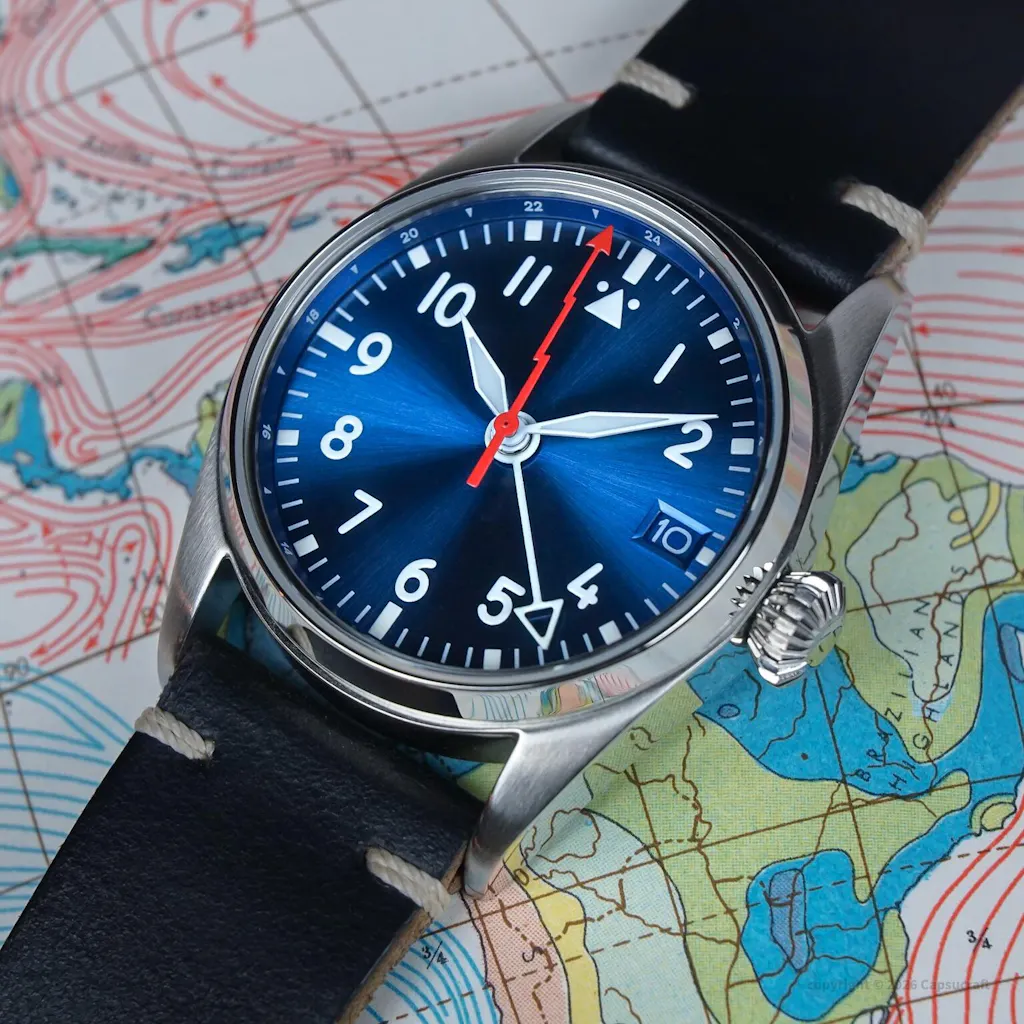
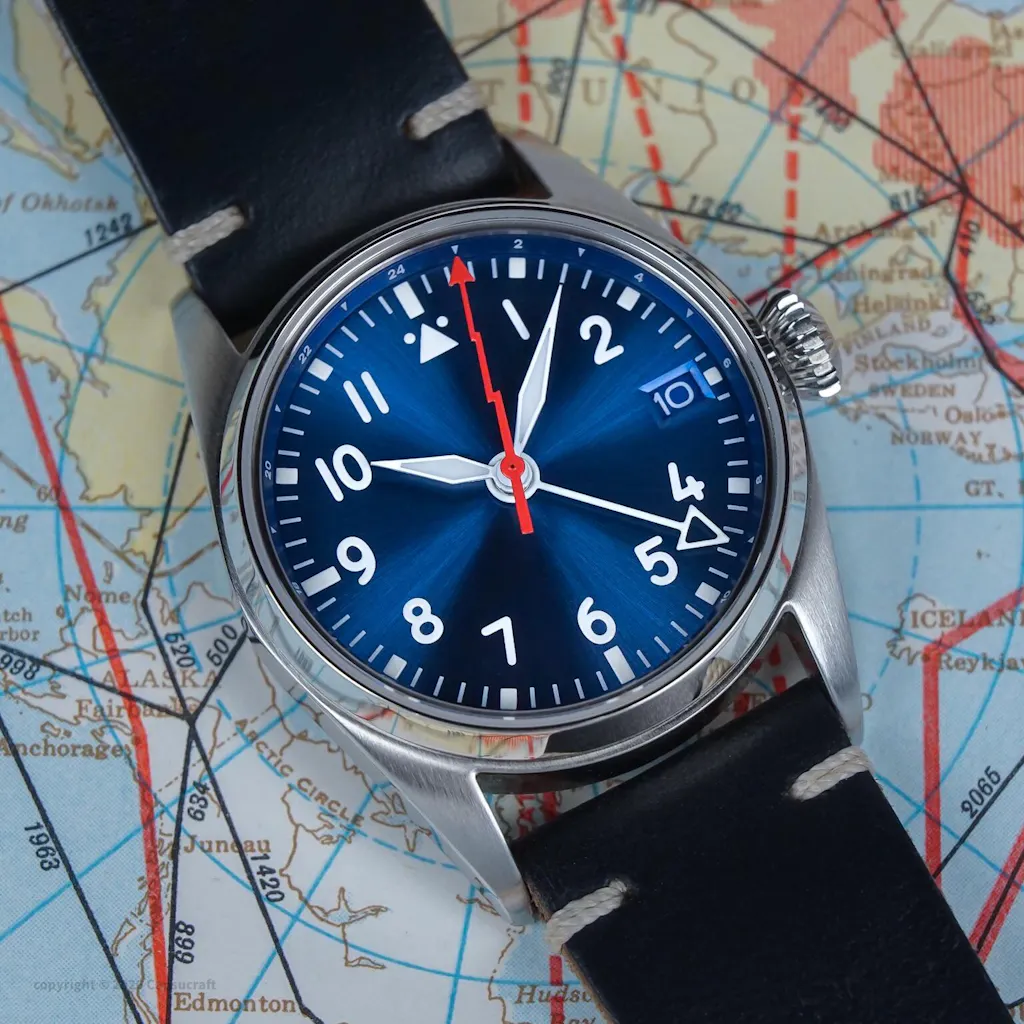
Pilot 34mm 10.96mm 316L SS Smallest GMT NH34 case
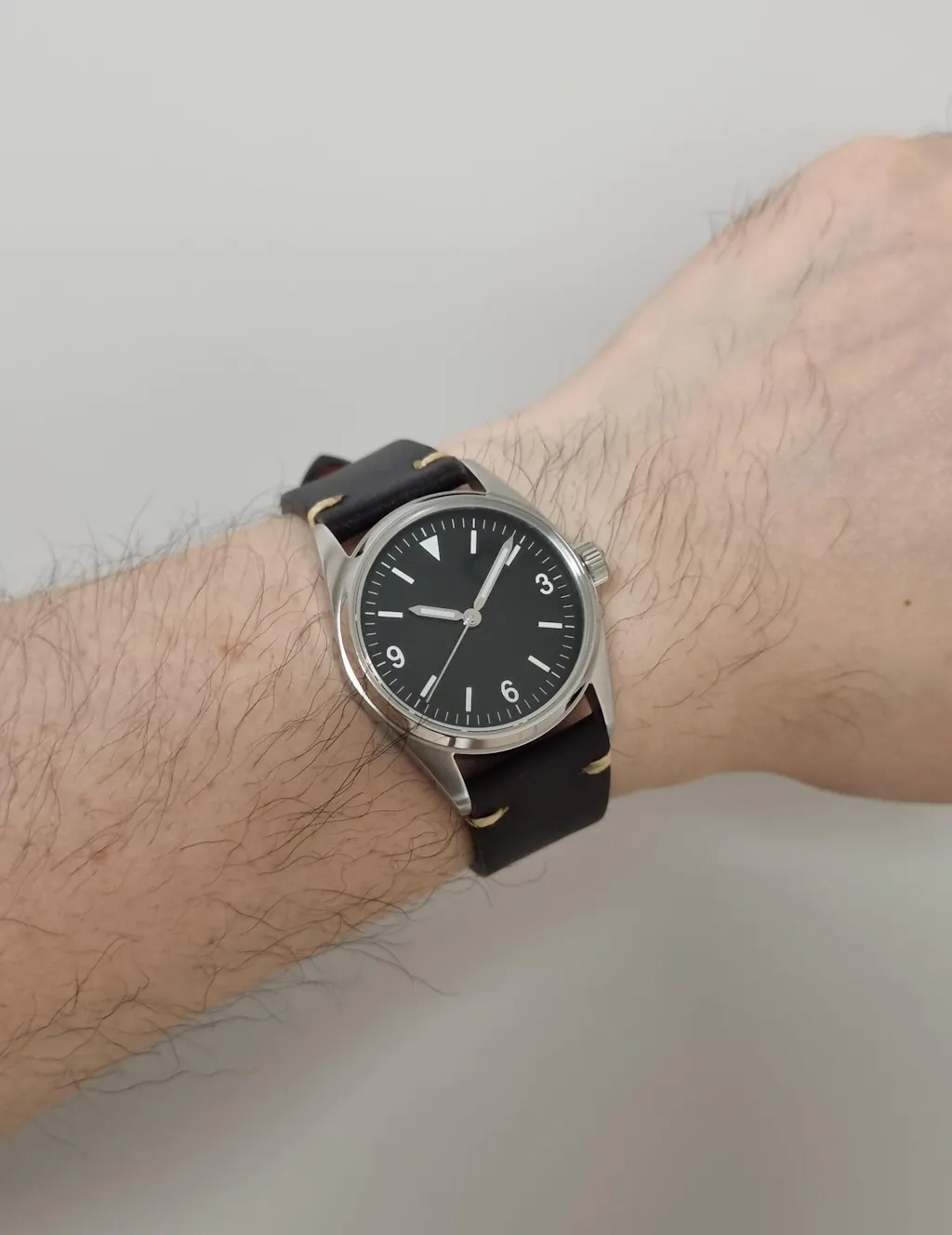
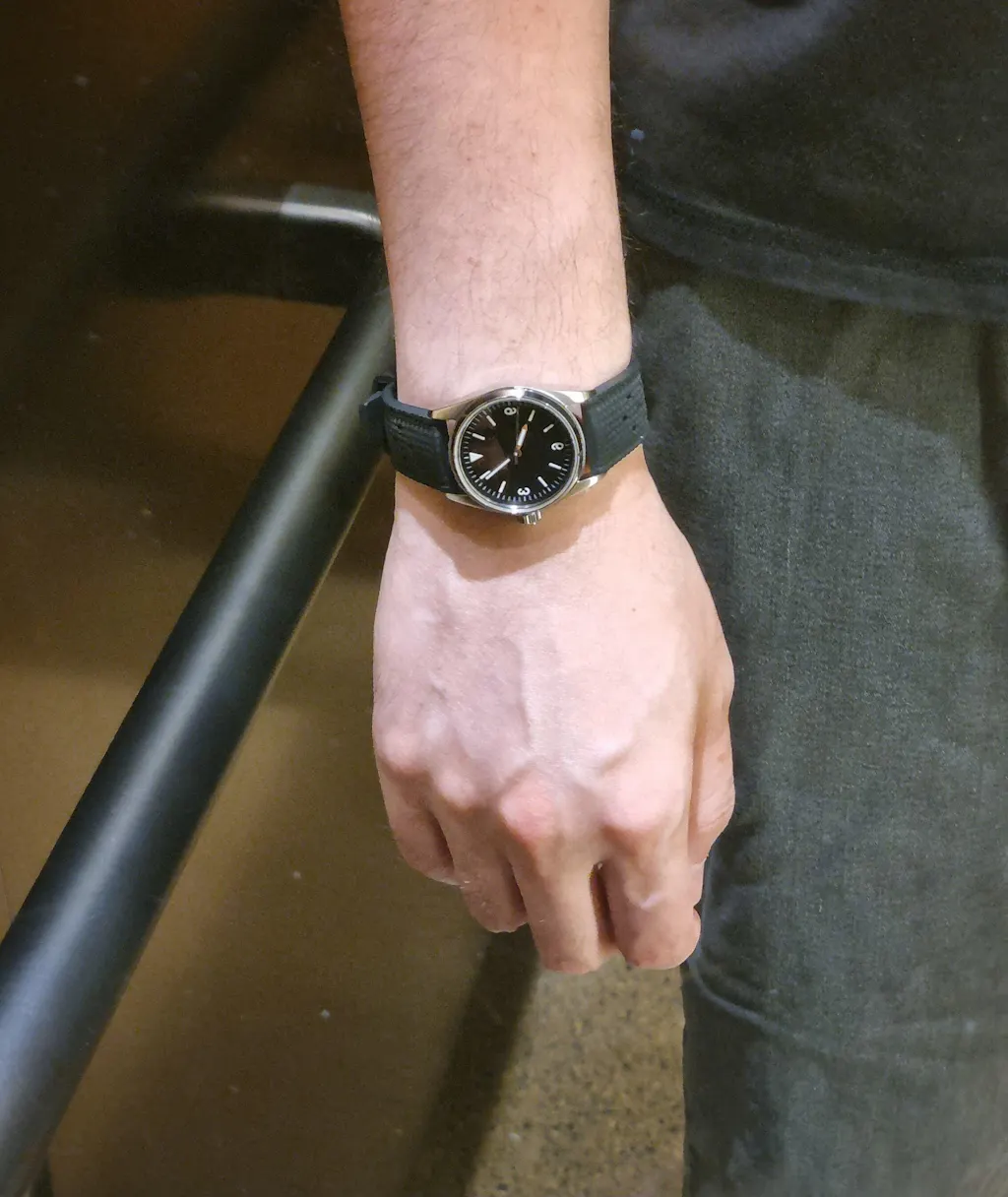
Explorer 36 36mm 9.96mm 316L SS or Grade 4 Ti Vintage-tool aesthetic
62GS 36mm 11.3mm 316L SS GS-inspired silhouette · GMT-ready
1908 36mm 10.75mm 316L SS · also yellow gold PVD Formal dress · GMT-ready
Seikonaut 38mm 10.0mm 316L SS or Grade 4 Ti Sports-luxury
SKX013 Diver 38 38mm 10.86mm 316L SS Dive-watch icon, smaller proportions

The 36mm tier is the deepest — three distinct cases, each with a different design language. Pick your wrist size first, then the personality.

The 62GS is the only bezel-less design with a box sapphire — a domed box-shaped sapphire that rises above the case top, giving it a vintage GS silhouette and tactile presence on the wrist.

The SKX013 Diver 38 is the dive-watch entry to the smaller-case lineup. Released as the modder's evolution of the discontinued Seiko SKX013 (factory-discontinued 2019), it carries the rotating ceramic bezel, jubilee bracelet compatibility, and tool-watch silhouette that defined the smaller-case dive idiom. Available in black or green ceramic insert. Now in pre-order — 30% off, never repeated.

Titanium is specific, not a gimmick. Explorer comes in titanium; Seikonaut comes in steel and titanium. Grade 4 titanium runs ~40% lighter than 316L, resists corrosion, and is harder than steel. The titanium Seikonaut at 29g vs. its 49g steel sibling is the cleanest example.

The full titanium lineup lives under Titanium Parts.


A note on cadence. Lucius Atelier releases new case designs every year. The SKX013 Diver 38 is the May 2026 addition; by year's end there will likely be more.


The Ultra Thin Edition — why most NH cases are thicker than they need to be

Most Seiko mod cases run 13–14mm thick. There's a structural reason: the NH35 is 7.59mm tall, the dial sits above it, the chapter ring above that, the sapphire on top, the case back closes underneath. Add wall thickness for water resistance and rigidity, and you're at 13mm minimum.

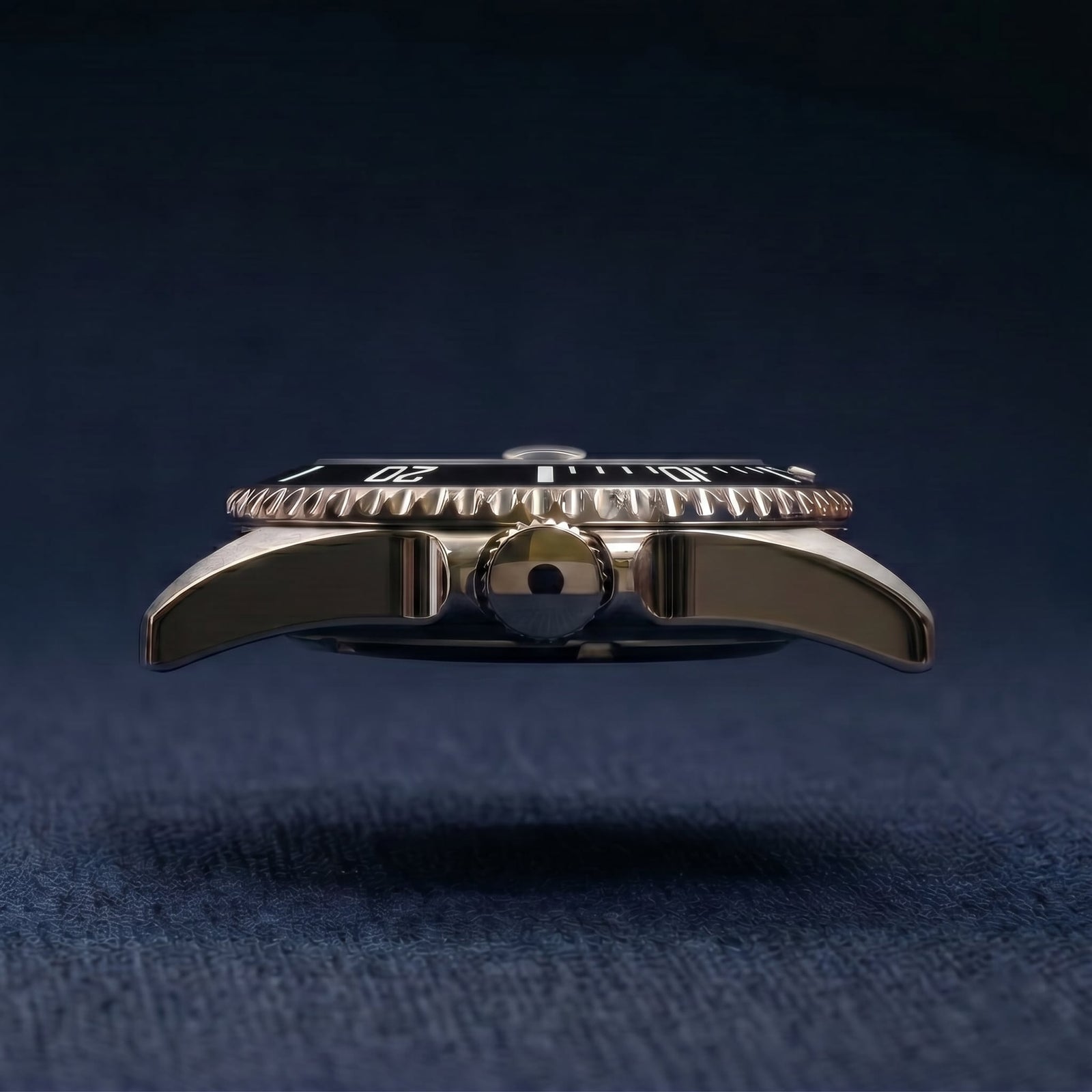
The Lucius Atelier Ultra Thin Edition pushes that floor down. Bauhaus 33mm at 9.93mm with a solid case back. Seikonaut 38mm at 10.0mm in steel and titanium. 1908 36mm at 10.75mm despite being NH34 GMT-ready. Some of the thinnest NH-compatible cases on the market — the engineering work was redone from scratch rather than inherited from the SKX template.

Why it matters: a thinner case wears smaller than its diameter suggests. A 38mm Seikonaut at 10mm thick reads on the wrist closer to a 36mm at 12mm. It slips under a shirt cuff. It doesn't catch on jacket sleeves. Instead of a puck on the wrist, you get something that sits flush.

Lucius Atelier Ultra Thin Edition case cross-section blueprint — NH movement, dial, chapter ring, sapphire stack-up
Cross-section · ø33–38mm range · 9.96mm vs ~14mm typical · 29% slimmer
SKX013 thinness comparison — modded Seiko SKX013 at 14.5mm vs Lucius Atelier SKX013 Diver 38 Ultra Thin Edition at 10.86mm
Both watches measure 38mm in diameter. Left: stock Seiko SKX013 (13mm) modded with three of our most popular upgrades — sloped sapphire crystal, ceramic bezel insert, and Submariner-style bezel shape — adding ~1.5mm to land at 14.5mm. Right: the Lucius Atelier SKX013 Diver 38, engineered from the case up to land at 10.86mm fully built. Roughly 25% thinner.

The SKX013 Chapter Ring — The Customisation Layer Across the Whole Lineup

Every smaller case in the lineup uses the same SKX013-spec chapter ring. Seiko discontinued the SKX013 in 2019, but the chapter ring dimensions live on as the de facto standard across the LA smaller-case ecosystem.

This was deliberate. The chapter ring is a small inner ring that sits between the dial and the case wall, holding the printed minute track. Keeping all seven cases compatible with this single spec gives every build access to the same deep catalogue.

Here's the part most guides miss: chapter rings are the cheapest swap with the loudest range. The same red ring reads invisible against a red dial and shouts against a white one. The dial does the talking — the chapter ring decides the volume.

That makes the chapter ring a uniquely powerful customisation layer. You can build a watch that whispers (matched dial-and-ring colour, harmony, restraint) or one that shouts (high-contrast clash, deliberate tension, the ring fighting the dial for attention). Both are legitimate. Neither is wrong. The mistake is committing without test-fitting — pull the dial next to the ring before assembly, decide whether you want harmony or tension, then commit.

A coloured chapter ring against a clinical white dial transforms the silhouette without touching the parts that cost real money. A printed minute-track ring against a textured dial adds technical authority. A mirror-polished ring on a matte dial creates depth. Each direction is a different watch.

Browse all chapter rings →

Coloured chapter rings for SKX013 Seiko mod builds — red, yellow with 24-hour scale, green
Three coloured rehauts · red, yellow 24-hour, green · SKX013 chapter ring spec

Dials

The dial is the most personal decision in the build — and where the community's design freedom gets really interesting, because Seiko itself never produced half the designs available aftermarket.

A few conventions to internalise:

  • Dial diameter matches case family. The smaller-case lineup uses 28.5mm dials.
  • Dial feet must match the movement. All NH-series movements share dial foot positions, so any NH-compatible dial fits any NH movement.
  • Date window position matters. 3 o'clock suits classic divers. 4:30 is a Seiko hallmark. No-date dials (NH38 or NH70/71/72) give the cleanest face. Open-heart dials show the balance wheel through a cutout.

For a step-by-step on installing a dial and hands, see How To Modify Your SEIKO Watch — Dial and Hands.

Browse all dials →


Understanding Lume — Three Phosphors, Three Reasons to Care

Lume is misunderstood because three different phosphors get used, and they behave differently.

Lumibrite (Seiko factory). Seiko's proprietary phosphor — green at night, white-cream by day. Strong and long-lasting. If you're swapping a dial or hands on a stock Seiko, you're losing Lumibrite consistency unless you match deliberately.

C3 Super-LumiNova (common aftermarket). Generic Swiss Super-LumiNova. Green-yellow at night, creamy by day. Fine; just not remarkable.

BGW9 Super-LumiNova (Lucius Atelier standard). A different Swiss phosphor — ice-blue at night, near-white by day. Most LA dials use BGW9. It's the visual signature you'll recognise in customer photos: clean white during the day, distinctive cool blue when the lights go out. For the technical breakdown — including the brightness chart that puts BGW9 at 95% of C3's intensity — see our BGW9 deep-dive.

Application thickness matters as much as phosphor choice. Thin gives 30 minutes before fading. Three coats and proper charging gets you through a full night.


Hands

The cheapest component to swap and the easiest to get wrong. The rule that catches beginners: hand length must match the dial diameter, and hand colour must match the dial's index treatment. Polished silver indices want polished silver hands. Black indices want black hands.

The named styles worth knowing:

  • Sword — sharp blade-shape; Cartier dress, Omega Seamaster tool
  • Dauphine / Grand Seiko Dauphine — faceted dress hands; the GS variant adds a brushed top
  • Mercedes — the three-pronged Rolex hand from the 1953 Explorer, found on roughly 60% of all dive watches
  • Snowflake — Tudor's signature hand from the 1969 Submariner ref. 7016, designed for the French Marine Nationale
  • Broad Arrow — vintage Omega Speedmaster, 1957, military energy
  • Marine Master ("MM Hands") — the chunky Seiko Marinemaster SBDX001 dive style; pure tool
  • Breguet — invented in 1783 by Abraham-Louis Breguet with a hollow eccentric "moon" tip; ours is built from multiple faceted components with PVD-blue precision on the second hand — the most production-difficult set in our catalogue
  • 1908 Sword Breguet — Breguet hour paired with sword minute and second; designed for our 1908 case
  • Teardrop Needle ("FPJ") — homages F.P. Journe, one of the most respected independent watchmakers

Naming around the icons. Two of our designs pay tribute to icons whose names we couldn't borrow. The Great Fathom is our take on the Blancpain Fifty Fathoms handset — the broad sword hands that defined the modern dive watch when Blancpain launched the original in 1953. The Great Oak nods to Audemars Piguet's Royal Oak, designed by Gérald Genta in 1972, with its baton-across-all-three-hands signature.

Thermally blued steel. Two hands use real thermally heated blue steel — the same 16th-century technique Breguet himself used. Alpha (sharp, angular) and Lance (slender, spear-shaped) get their colour from heating steel to ~280°C, where the oxide layer turns iridescent cornflower blue.

Seiko mod hands — thermally blued Alpha, sword, and Breguet styles for NH35 builds
Three hand styles · Alpha (heated blue), Sword, Breguet

Browse all hands →


Bezels and Bezel Inserts

Not every case has a bezel. The 62GS 36mm skip it entirely — cleaner silhouette, thinner profile. The 62GS replaces the bezel with a box-shaped domed sapphire, which is its defining feature.

The three smaller cases that do carry a defined bezel each take a different design language:

  • 1908 (36mm) — split bezel, lower half finely fluted, upper half domed, both mirror polished. The signature aesthetic of the modern Rolex 1908 (released 2023). The double-domed sapphire follows the bezel curve for an uninterrupted profile.
  • Seikonaut (38mm) — rounded octagonal porthole-style bezel, inspired by Gérald Genta's 1976 Patek Philippe Nautilus.
  • SKX013 Diver 38 — the rotating dive bezel. Available with black or green ceramic insert at launch. The bezel is the canonical signal that a watch is built for the water — and the SKX013 Diver carries it in the smallest, thinnest dive proportions in the LA catalogue.

Where a rotating bezel exists, the bezel insert is the printed or material ring you see. Two materials dominate, and the conventional wisdom is out of date:

Aluminium inserts. Older builders remember aluminium as the "ghosting" material — fade and sun-bleached patina collectors prize. Modern aluminium inserts are anodised — a thick, hard oxide layer grown directly into the surface. Anodised inserts hold colour reliably and resist fade, ghosting, and chipping.

Ceramic inserts. Durability is the win — Mohs hardness ~9 versus aluminium's 3. Ceramic genuinely doesn't scratch in normal wear, and the colour is locked in for life. The SKX013 Diver 38 ships with ceramic at launch.

For step-by-step bezel and insert swaps, see How To Modify Your SEIKO Watch — Bezel & Bezel Insert.


Crystals and AR Coating

Sapphire. Always. Mineral on a mod is settling, and it'll look settled within six months. Every LA case ships with sapphire pre-installed and AR-coated on both sides. Double-sided AR is the brand standard, not an upsell.

Most cases use flat sapphire. The 1908 uses double-domed sapphire that follows the bezel curve. The 62GS uses a box-shaped domed sapphire that rises above the case top. The Pilot 34mm uses double-domed sapphire for the extra 1mm needed to clear NH34 GMT hands.

If you're modifying an actual original Seiko SKX013, sapphire isn't pre-installed and needs pressing in. For crystal installation, see How To Modify Your SEIKO Watch — Sapphire Crystal.


Two Paths to a Modded Seiko

Modding splits cleanly into two workflows.

Path A — Modify a Stock Seiko

You start with an existing Seiko (typically a Seiko 5, SKX013, SKX007, or vintage piece) and swap individual parts. Cheaper entry, the path most beginners take. Disassemble a working watch, swap dial / hands / bezel / insert / crystal, reassemble.

For a worked Path A example, see How to Build Your Own Fifty Fathoms Homage.

Path B — Build From Scratch on a Lucius Atelier Case

Buy a bare case, dial, hands, chapter ring, and movement separately, assemble from zero. The path experienced modders take, and the path the LA smaller-case lineup is designed for. No working watch gets disassembled.

Path A's appeal is cost. Path B's appeal is design freedom — you pick every component, including the case, and end up with something the factory would never have made.


Your First Build — Step by Step

Allow three hours for your first attempt; subsequent builds drop to under an hour.

A note on decision order. Pick your case first. It constrains everything downstream — dial diameter, hand styles, bezel insert presence, finished silhouette. Then choose dial and hands. Movement is last, because almost any NH-series fits any LA case — with one exception. GMT vs non-GMT is the fork to decide upfront. A GMT travel watch needs the NH34, and not every case has internal clearance for the NH34's GMT hand stack.

Physical assembly is the inverse: assemble the module (movement + dial + hands + chapter ring), then drop it into the case.

Path B — Building From Scratch (Lucius Atelier Case)

The simpler path because the case ships ready to receive the assembled module:

  1. Place the dial onto the movement — align dial feet with the movement's holes. Press gently. If it doesn't seat cleanly, the feet are bent or the dial is wrong for your movement type. Don't force it.
  2. Install the hands — hour first, then minute, then second. Use a hand presser, not your fingers. Each should press on with a small audible click.
  3. Place the chapter ring on top of the dial. Drops in concentrically; gravity does the work.
  4. Drop the module into the case from the case-back side. Crown stem needs to be cut to length and screwed into the movement first.
  5. Flip the case over carefully.
  6. Screw the case back on. Don't overtighten — the gasket seals, not the torque.

That's it. LA cases ship with sapphire pre-installed, so no crystal press needed.

Path A — Modifying a Stock Seiko

Path A adds disassembly steps before the rebuild:

  1. Remove the strap by compressing the spring bar pins.
  2. Open the case back with a case opener.
  3. Remove the crown and stem by pressing the small lever next to the movement.
  4. Lift the movement out using a toothpick or movement holder.
  5. Remove the existing hands with a hand-removal lever — hour, minute, second, all aligned at 12.
  6. Remove the existing dial by carefully unhooking the dial feet.
  7. Install the new dial and hands (Path B steps 1–2).
  8. If swapping the crystal — press out the old, press in the new. Only applies to SKX013 / SKX007 builds upgrading to sapphire.
  9. Reinstall movement and case back.

For deeper step-by-step instructions, the Lucius Atelier blog has dedicated tutorials:


Tools You Actually Need

The tool kit for a Seiko mod is shorter than the internet suggests. Buy these once, use them for life:

  • Case knife / case opener — fitted to your specific case-back style
  • Hand-removal lever for taking old hands off
  • Hand presser for installing without scratching the dial. Lucius Atelier's solid brass movement holder sits on professional hand-setting tools — Bergeon Professional Hand Setter 8935, Bergeon 6012-4-P, others.
  • Crystal press with assorted dies — only needed for SKX013 cases or Path A builds.
  • Tweezers — fine-pointed, with plastic or wooden tips. Metal tips will scratch your hands and dial.
  • Loupe10×–20×. The 5× lenses sold in cheap kits aren't enough magnification.
  • Microfiber cloths and a rocket blower
Essential tools for Seiko modding — case knife, hand presser, brass movement holder, tweezers, loupe, microfiber, rocket blower
The 8 essentials · workbench zone for Seiko modding

Full watch tools collection →

What you don't need: a watchmaker's lathe, a timegrapher, a Bergeon Pro Mainspring Winder. Those are for movement servicing, not modding.


Common Mistakes — And How to Avoid Them

After fifteen years of customer builds, the same five mistakes show up.

1. Wrong crown stem length. Cut conservatively — too long and the crown sits proud, too short and you can't pull the crown to set the time. You can always shorten further; you can't lengthen.

2. Bent dial feet. Never force the dial. If the feet don't drop in cleanly, they're bent or the dial is wrong for your movement. Most modern LA dials ship with four feet — remove the two you don't need before installing. Our TIPS guide on fitting dials with four dial legs covers which feet to remove for which crown position.

3. Hand alignment off by a fraction. Hour and minute must align at 12:00 exactly. If they don't, set the date forward and watch each hand cross 12 — the misaligned one needs to be lifted and reseated.

4. Chapter ring colour mismatch (only sometimes a mistake). Plenty of builders chase the clash deliberately. The actual mistake is committing without test-fitting.

5. Over-tightening the case back. The gasket seals the case, not the torque. Tighten until firm; do not crank.


Where to Learn More — Active Communities

The active modding spaces in 2026:

All three welcome beginners and will tell you (politely) when your first build idea is a bad one — exactly what you want before spending money.


Build Inspiration — Real Customer Builds

Combinations that show up consistently in customer photos:

  • Stardust dial on the Explorer 36mm Ti — matte titanium against the speckled dial pattern, a signature LA pairing
  • Nautilus turquoise dial on the Seikonaut 38mm — sports-luxury at a 38mm proportion
  • 1908 dial on the 1908 case (silver-on-silver or yellow-gold-on-yellow-gold) — formal dress
  • Bauhaus 33mm with almost anything — intentionally minimal, carries everything from clean dials to coloured chapter rings
  • Explorer 1016 dial on the Explorer 36mm Ti — vintage-correct proportions, modern materials
  • SKX013 Diver 38 with the classic black-dial / Mercedes-hands build — the canonical dive-watch silhouette at a wearable size

Built something with LA parts? Tag @luciusatelier on Instagram. The best customer builds get featured.

Customer Seiko mod builds using Lucius Atelier smaller cases
Real customer builds · clockwise from top-left — Seiko-Dweller × Arctic White, 62GS × Great Oak GMT, Seikonaut × Nautilus Deep Blue, SKX013 × Pepsi GMT

Where to Start — Shop by Part

If this guide has done its job, you have a clearer picture of what your first (or next) build looks like. The fastest paths in:

For the full 2026 catalogue, shop the homepage.


Closing Thought

Seiko modding is the rare hobby where the buy-in is low, the ceiling is unlimited, and every piece on your wrist is a record of choices you made. Most people who finish their first build are halfway through planning their second before the first one's been worn for a week.

You don't need a full plan to start. Pick a 36mm case if you're going Path B. Pick a sapphire crystal if you're going Path A. Pick a dial that makes you smile every time you look at it.

Then build the next one.


Frequently Asked Questions

Is Seiko modding legal?

Yes — with one nuance. Modding a Seiko you own is legal, and so is selling parts and finished mods. Where it becomes a problem is using Seiko logos, branding, or trademarks on a modified watch. In October 2025, Seiko issued an official notice clarifying that modified watches displaying Seiko branding are not authorised, don't carry Seiko's warranty, and may infringe Seiko's IP. The community-accepted solution: build with unbranded (or LA-branded) dials, retain the Seiko movement, and don't represent the finished mod as a Seiko factory product.

How long does it take to build a Seiko mod?

First build, around three hours including tutorial videos and double-checking. By your fifth build, under an hour. The bottleneck is parts shipping, not assembly.

What movement should I use — NH35, NH36, NH38, NH34, or NH70?

NH35 if you want a date. NH36 if you want a day-date. NH38 for a clean no-date or open-heart dial. NH34 for a GMT travel watch. NH70/71/72 are skeletal. All share the same Type M architecture and are interchangeable across the Lucius Atelier smaller-case lineup.

Can I mod an existing Seiko, or do I need to build from scratch?

Both. Path A modifies an existing Seiko (cheaper, more disassembly). Path B builds from scratch on an LA case (full design freedom, simpler assembly). New modders usually start with Path A; experienced modders move to Path B.

Why a smaller case for a Seiko mod?

Smaller cases (33–38mm) wear better on most wrists, slip under a shirt cuff, and let dial designs read at correct proportions. The LA smaller-case lineup spans seven cases from 33mm Bauhaus to 38mm SKX013 Diver, every one Ultra Thin Edition.

What is the thinnest Seiko mod case for NH movements?

The Lucius Atelier Bauhaus 33mm Ultra Thin Edition is the thinnest NH-compatible Seiko mod case on the market at 9.93mm with a solid case back. The rest of the Ultra Thin lineup sits close behind — Seikonaut 38mm at 10.0mm, SKX013 Diver 38 at 10.86mm, Pilot 34mm at 10.96mm, even the NH34 GMT-ready 1908 36mm at 10.75mm. For context, most Seiko mod cases on the market run 13–14mm thick. The Ultra Thin programme is an engineering effort to push the floor below 10mm while remaining NH-compatible.

What is BGW9 lume?

A specific Swiss Super-LumiNova phosphor — appears white-cream in daylight, glows ice-blue at night. The lume Lucius Atelier uses on most dials. Stock Seikos use Lumibrite (green glow); other modding shops often use C3 (green-yellow). BGW9's signature is the cool blue.

What does "Ultra Thin Edition" actually mean?

An LA engineering programme — cases redesigned from the ground up to reduce thickness while remaining NH-compatible. Bauhaus 33mm at 9.93mm; Seikonaut 38mm at 10.0mm; 1908 36mm at 10.75mm despite NH34 GMT-readiness. Most Seiko mod cases run 13–14mm thick — Ultra Thin sits roughly 3mm below that.

Do I need special tools to mod a Seiko?

About eight tools total: case knife, hand-removal lever, hand presser (paired with a brass movement holder), tweezers with plastic or wooden tips, 10×–20× loupe, microfiber cloths, rocket blower.

What is an SKX013 chapter ring and why does it matter?

A specific size and spec used by Seiko in the SKX013 (discontinued 2019). The LA smaller-case lineup all uses this same spec, which means dozens of chapter ring designs work across every smaller case in the catalogue.

What is the SKX013 Diver 38 and how does it differ from the original Seiko SKX013?

The Lucius Atelier SKX013 Diver 38 is a modder's evolution of the form factor Seiko discontinued in 2019. Same 38mm proportions and rotating dive bezel that defined the original, redesigned to Ultra Thin Edition specs (NH-compatible, double-sided AR sapphire pre-installed, ceramic insert in black or green). The original Seiko SKX013 used Hardlex and an aluminium insert; ours uses sapphire and ceramic. It's the smaller-case dive-watch entry point for builders who want vintage proportions with modern materials.

Leave a comment

Comments will be approved before showing up.