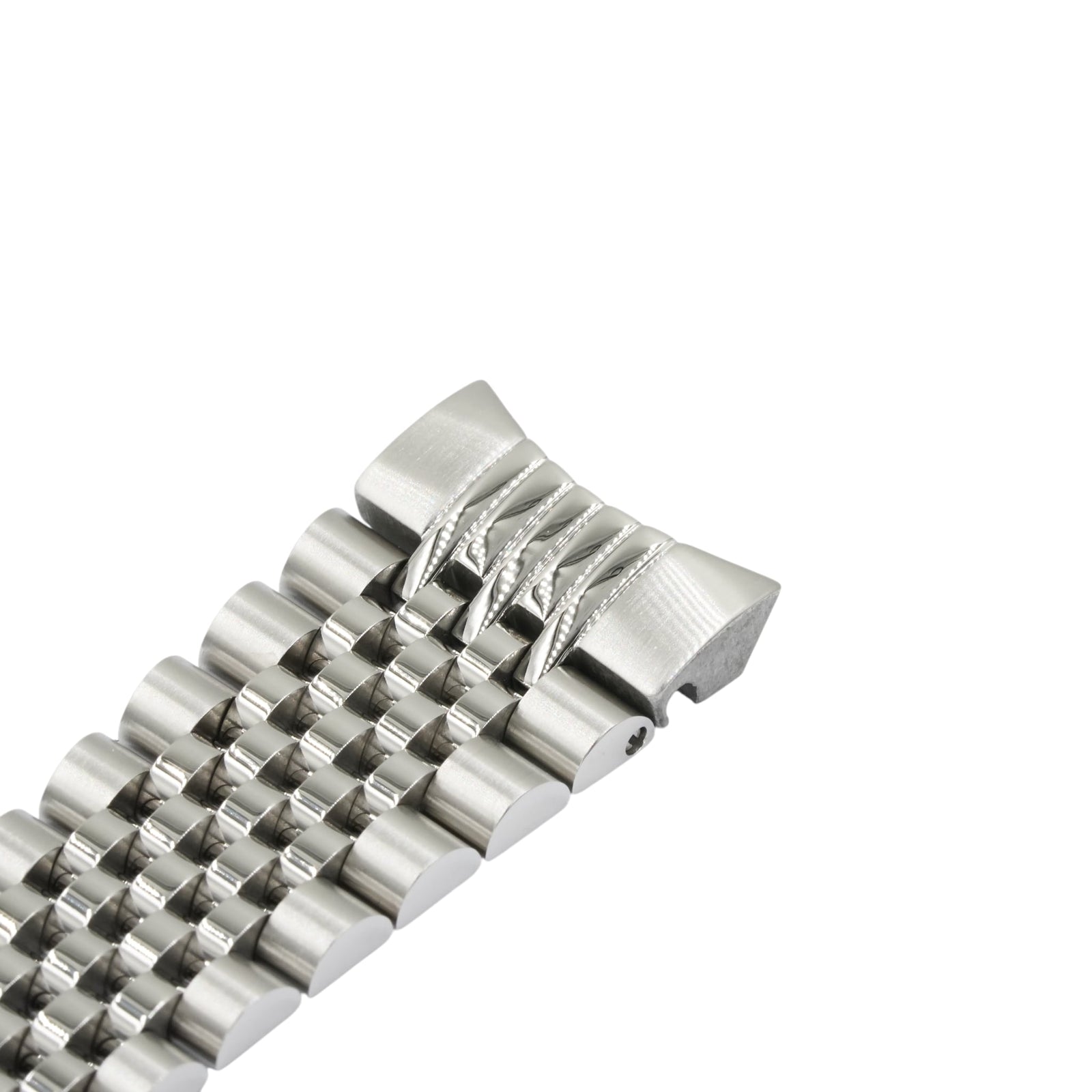
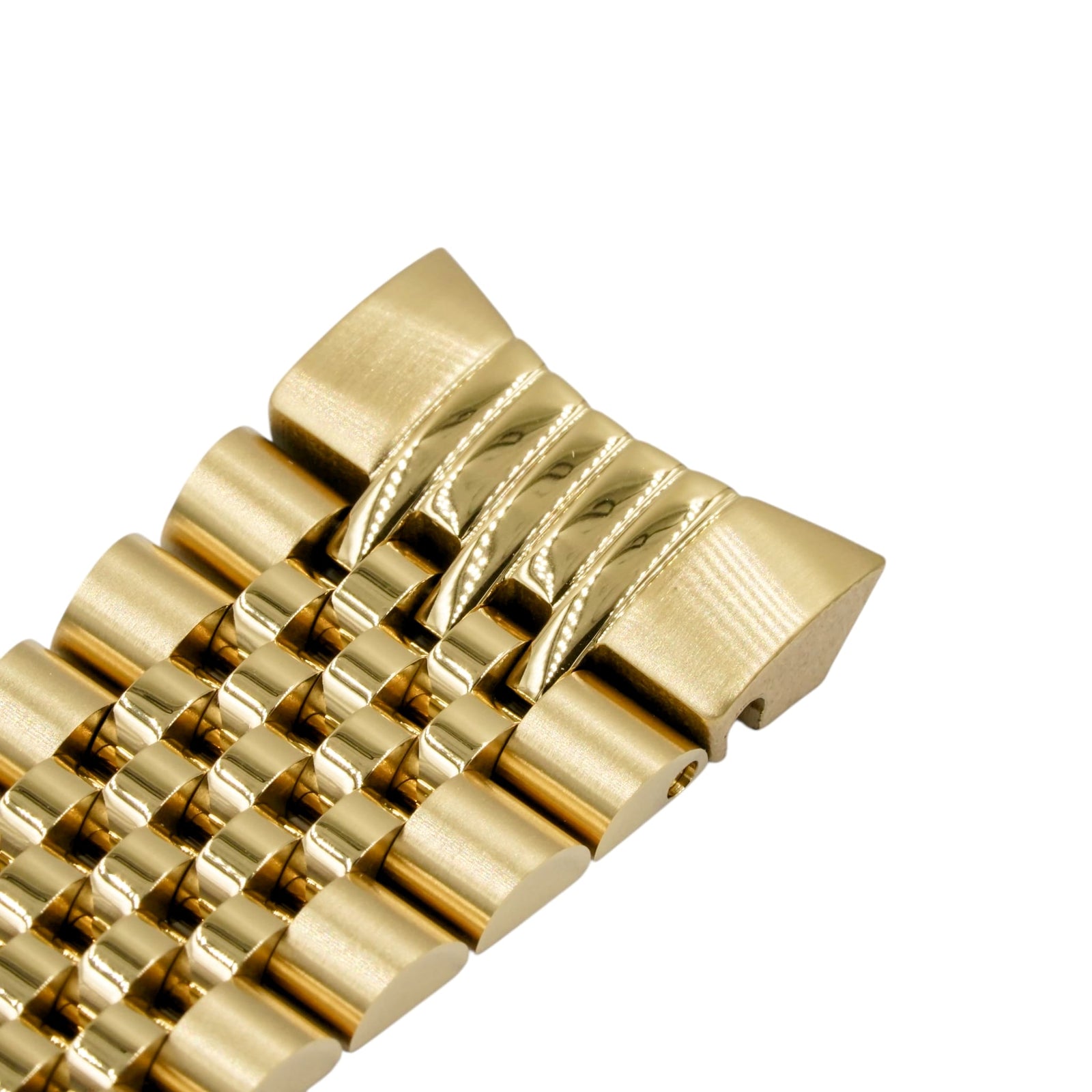
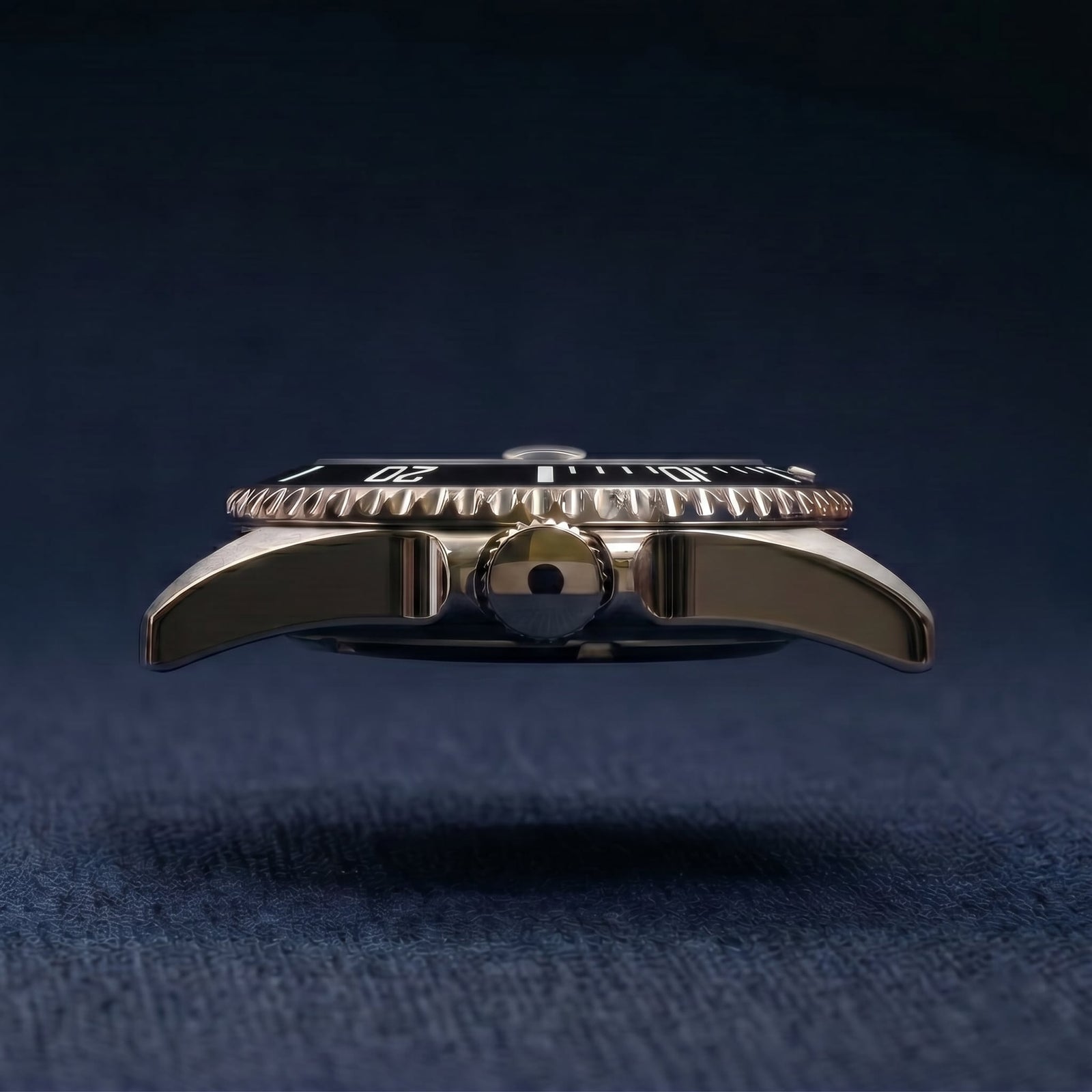
Bracelets engineered for your case — not adapted to it. Every bracelet in this collection is built for the Lucius Atelier case range. The end-links are shaped to seat against our case profiles, so a bracelet here fits your build cleanly — not approximately, the way a generic 20mm bracelet never will.
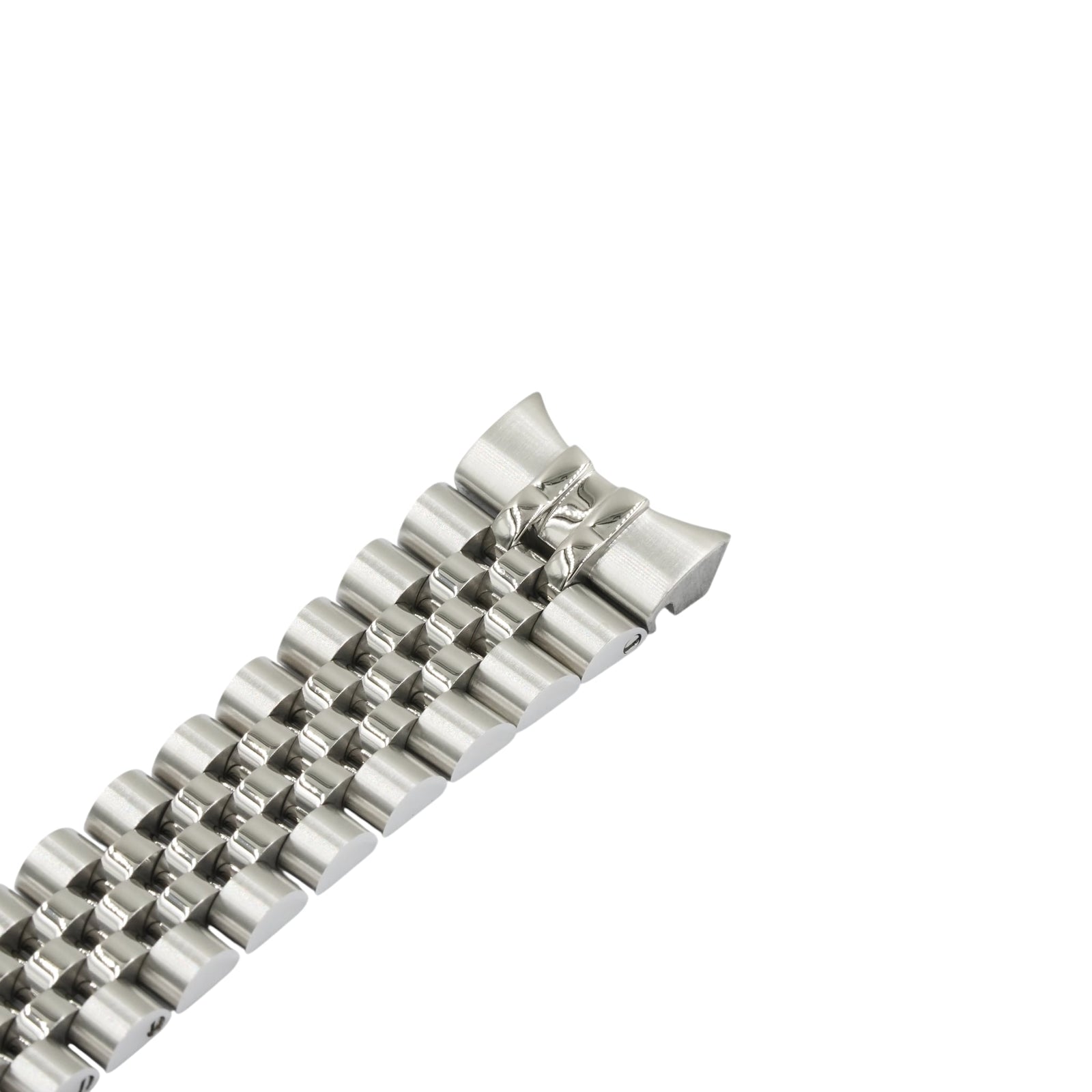
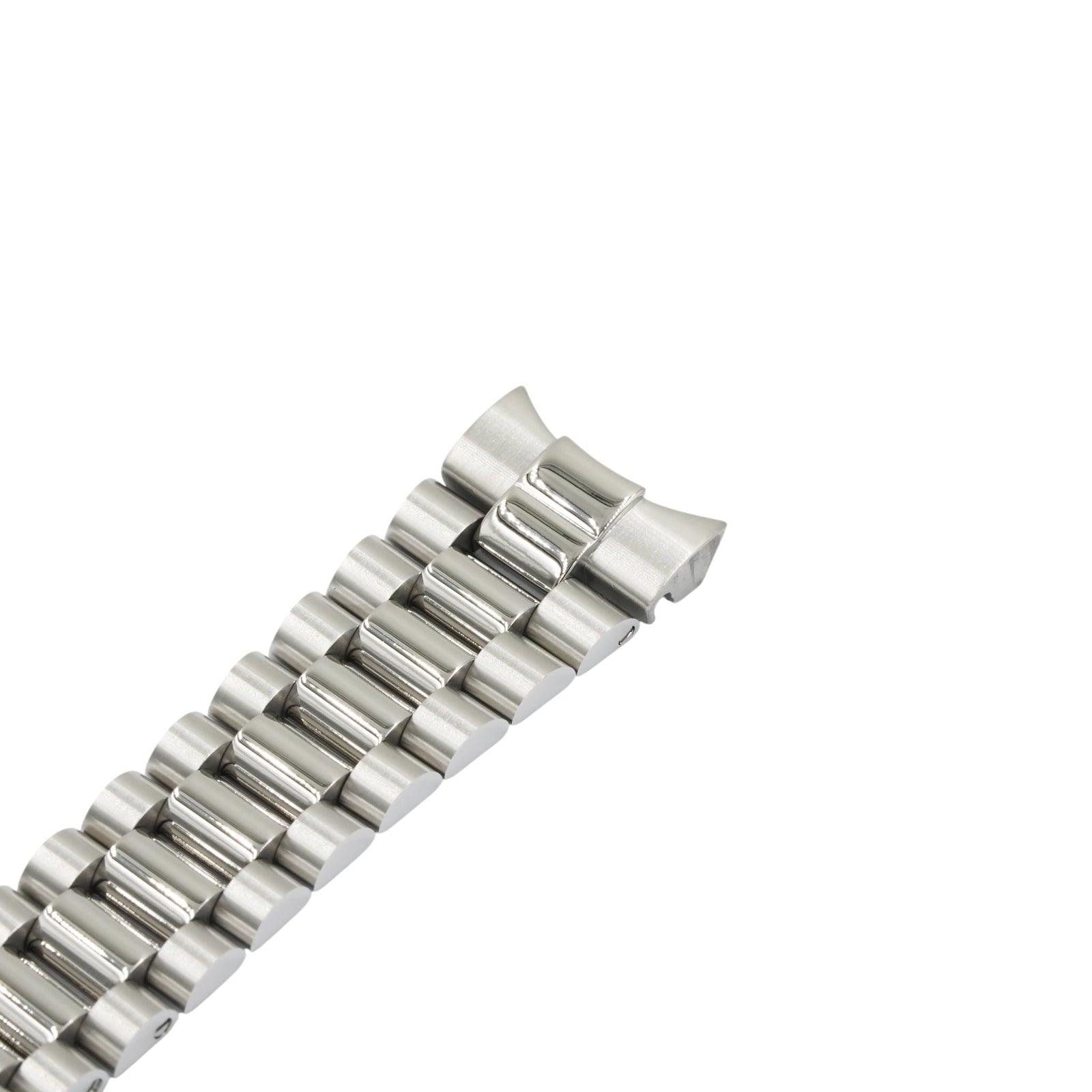
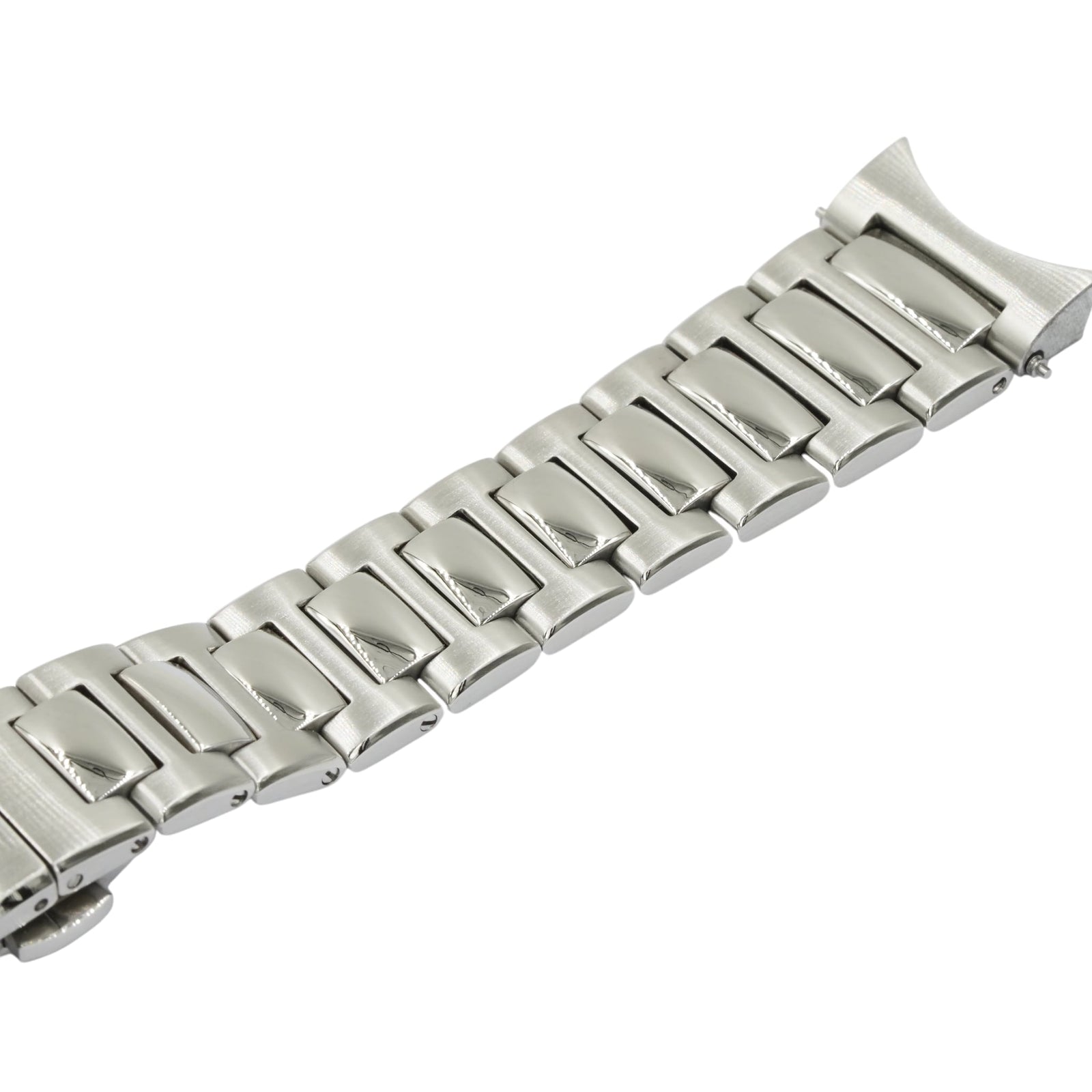
Beyond that shared fit, it is all choice. Solid 316L stainless steel or featherweight Grade 4 titanium; a 20mm taper down to 16mm or 18mm; a heritage silhouette — Oyster, Jubilee, President, Grand Seiko, Settimo, or the sculpted Seikonaut; and your clasp, from a classic butterfly deployant to our new toolless on-the-fly micro-adjust. Every one resizes at home with a screwdriver.
| Bracelet | Taper | Clasp | Material |
|---|---|---|---|
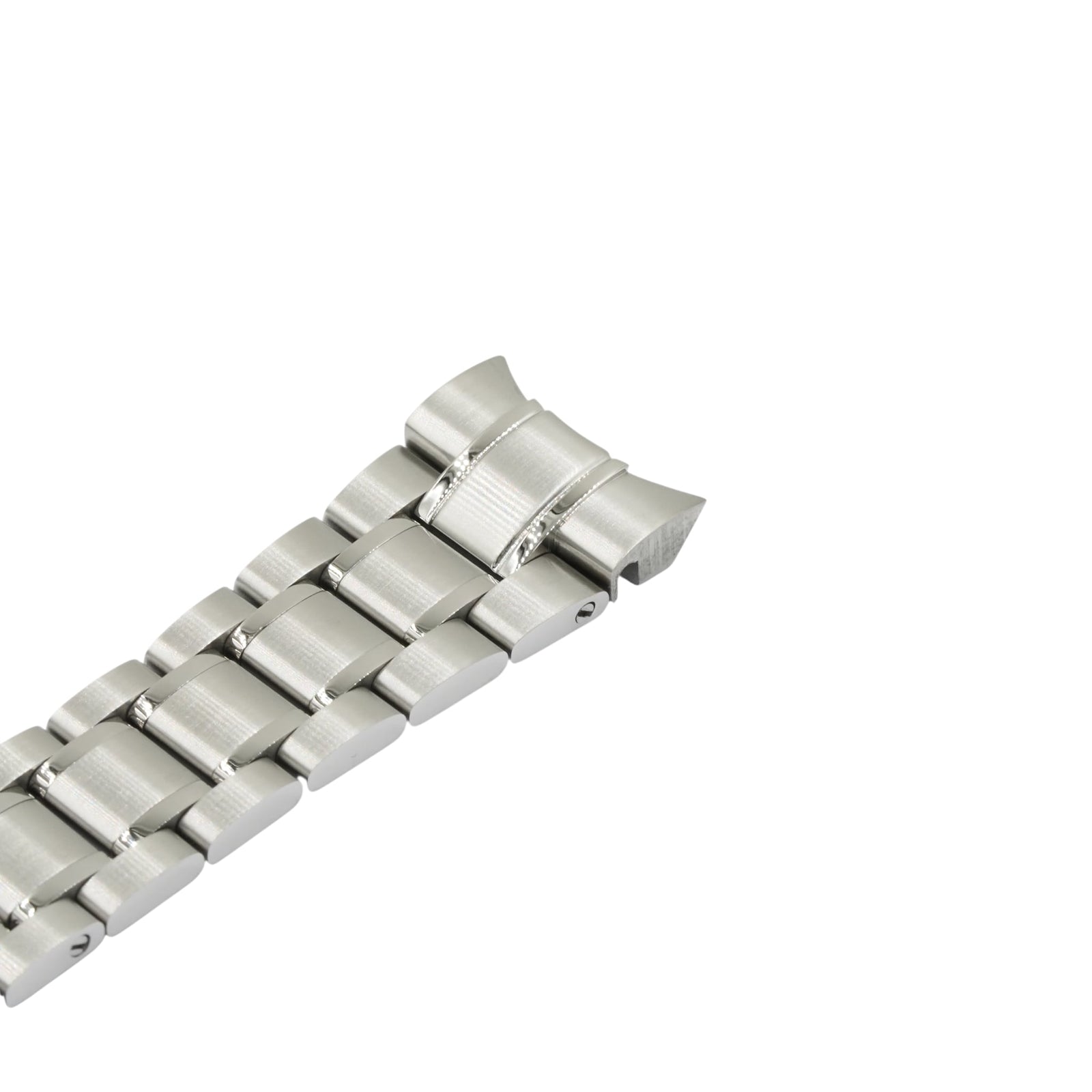
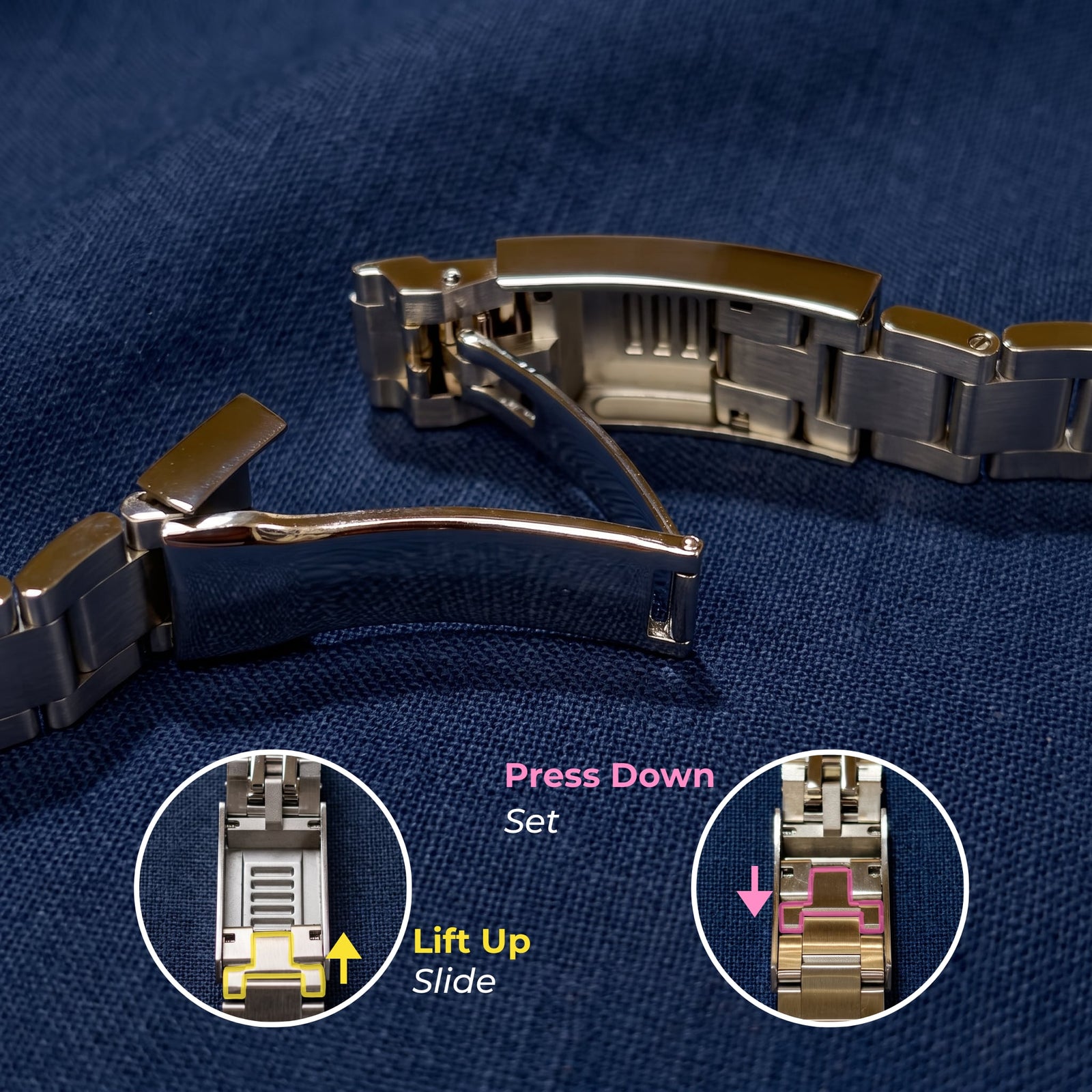
| Oyster [Brushed] · NEW | 20/16 | On-the-fly | Steel |
| Oyster [Mid-Polished] | 20/18 | Micro-adjust | Steel |
| Oyster [DLC Black] | 20/18 | Micro-adjust | Steel · DLC |
| Jubilee | 20/16 | Butterfly | Steel |
| President | 20/16 | Butterfly | Steel |
| GS | 20/16 | Butterfly | Steel |
| Settimo — Silver | 20/16 | Butterfly | Steel |
| Settimo — Yellow Gold | 20/16 | Butterfly | Steel · PVD gold |
| Seikonaut | 20/16 | Butterfly | Steel |
| Seikonaut — Titanium | 20/16 | Butterfly | Titanium |
Every bracelet uses a 20mm lug width and includes two spring bars. Bracelets are built for Lucius Atelier cases — a generic 20mm bracelet will not fit our case profiles. Link counts and exact dimensions vary by model; see each product page.
Materials. Most bracelets are solid 316L stainless steel. The Settimo Yellow Gold adds a hard PVD gold coating; the DLC Oyster a Diamond-Like Carbon coating several times harder than bare steel; and the Seikonaut Titanium is machined from Grade 4 titanium (with a steel clasp and screws) for roughly 30% less weight.
Clasps. Three types across the range: a butterfly deployant that opens from the centre (the dress and sculpted bracelets); a Rolex-style clasp with five hidden micro-adjustments on the 20/18 Oysters; and a new toolless on-the-fly clasp with nine micro-adjustments on the 20/16 Oyster [Brushed].
Sizing. Every bracelet uses screw-type link pins — remove links evenly from both sides with a small screwdriver, then fine-tune at the clasp where the model allows. Link screws ship slightly loose for easy sizing; tighten them fully (a drop of threadlocker helps) before wear.
Whichever you choose, it is built for your case — and sized to your wrist at home.
Everything worth knowing before you buy — which cases each bracelet fits, sizing and resizing, clasp types, and materials.

![Seikonaut Bracelet 20/16mm [TITANIUM] - - - - Lucius Atelier - Swiss Quality Seiko Watch Mod Parts](http://luciusatelier.com/cdn/shop/files/Seikonaut-Bracelet-2016mm-TITANIUM-Lucius-Atelier-Swiss-Quality-Seiko-Watch-Mod-Parts-7_1600x.jpg?v=1745004195)
![Seikonaut Bracelet 20/16mm [TITANIUM] - - - - Lucius Atelier - Swiss Quality Seiko Watch Mod Parts](http://luciusatelier.com/cdn/shop/files/Seikonaut-Bracelet-2016mm-TITANIUM-Lucius-Atelier-Swiss-Quality-Seiko-Watch-Mod-Parts-7_2000x.jpg?v=1745004195)






![Oyster Bracelet 20/16mm [Brushed]](http://luciusatelier.com/cdn/shop/files/oyster-bracelet-brushed-v2-8_1200x.jpg?v=1784114472)



![Oyster Bracelet 20/18mm [Mid-Polished] - - - - Lucius Atelier - Swiss Quality Seiko Watch Mod Parts](http://luciusatelier.com/cdn/shop/products/Oyster-Bracelet-2018mm-Mid-Polished-Lucius-Atelier-Swiss-Quality-Seiko-Watch-Mod-Parts_1200x.jpg?v=1667243758)
![Oyster Bracelet 20/18mm [Mid-Polished] - - - - Lucius Atelier - Swiss Quality Seiko Watch Mod Parts](http://luciusatelier.com/cdn/shop/products/Oyster-Bracelet-2018mm-Mid-Polished-Lucius-Atelier-Swiss-Quality-Seiko-Watch-Mod-Parts-2_1200x.jpg?v=1667243763)
![Oyster Bracelet 20/18mm [Mid-Polished] - - - - Lucius Atelier - Swiss Quality Seiko Watch Mod Parts](http://luciusatelier.com/cdn/shop/products/Oyster-Bracelet-2018mm-Mid-Polished-Lucius-Atelier-Swiss-Quality-Seiko-Watch-Mod-Parts-3_1200x.jpg?v=1667243768)
![Oyster Bracelet 20/18mm [Mid-Polished] - - - - Lucius Atelier - Swiss Quality Seiko Watch Mod Parts](http://luciusatelier.com/cdn/shop/products/Oyster-Bracelet-2018mm-Mid-Polished-Lucius-Atelier-Swiss-Quality-Seiko-Watch-Mod-Parts-4_1200x.jpg?v=1667243772)
![Oyster Bracelet 20/18mm [Mid-Polished] - - - - Lucius Atelier - Swiss Quality Seiko Watch Mod Parts](http://luciusatelier.com/cdn/shop/products/Oyster-Bracelet-2018mm-Mid-Polished-Lucius-Atelier-Swiss-Quality-Seiko-Watch-Mod-Parts-5_1200x.jpg?v=1667243777)
![Oyster Bracelet 20/18mm [Mid-Polished] - - - - Lucius Atelier - Swiss Quality Seiko Watch Mod Parts](http://luciusatelier.com/cdn/shop/products/Oyster-Bracelet-2018mm-Mid-Polished-Lucius-Atelier-Swiss-Quality-Seiko-Watch-Mod-Parts-6_1200x.jpg?v=1667243781)
![Oyster Bracelet 20/18mm [Mid-Polished] - - - - Lucius Atelier - Swiss Quality Seiko Watch Mod Parts](http://luciusatelier.com/cdn/shop/products/Oyster-Bracelet-2018mm-Mid-Polished-Lucius-Atelier-Swiss-Quality-Seiko-Watch-Mod-Parts-7_1200x.jpg?v=1667243785)
![Oyster Bracelet 20/18mm [Mid-Polished] - - - - Lucius Atelier - Swiss Quality Seiko Watch Mod Parts](http://luciusatelier.com/cdn/shop/products/Oyster-Bracelet-2018mm-Mid-Polished-Lucius-Atelier-Swiss-Quality-Seiko-Watch-Mod-Parts-8_1200x.jpg?v=1667243789)
![Oyster Bracelet 20/18mm [Mid-Polished] - - - - Lucius Atelier - Swiss Quality Seiko Watch Mod Parts](http://luciusatelier.com/cdn/shop/products/Oyster-Bracelet-2018mm-Mid-Polished-Lucius-Atelier-Swiss-Quality-Seiko-Watch-Mod-Parts-2_1600x.jpg?v=1667243763)
![Oyster Bracelet 20/18mm [Mid-Polished] - - - - Lucius Atelier - Swiss Quality Seiko Watch Mod Parts](http://luciusatelier.com/cdn/shop/products/Oyster-Bracelet-2018mm-Mid-Polished-Lucius-Atelier-Swiss-Quality-Seiko-Watch-Mod-Parts-2_2000x.jpg?v=1667243763)
![Oyster Bracelet 20/18mm [Mid-Polished] (DLC BLACK EDITION) - - - - Lucius Atelier - Swiss Quality Seiko Watch Mod Parts](http://luciusatelier.com/cdn/shop/products/Oyster-Bracelet-2018mm-Mid-Polished-DLC-BLACK-EDITION-Lucius-Atelier-Swiss-Quality-Seiko-Watch-Mod-Parts_1200x.jpg?v=1673205403)
![Oyster Bracelet 20/18mm [Mid-Polished] (DLC BLACK EDITION) - - - - Lucius Atelier - Swiss Quality Seiko Watch Mod Parts](http://luciusatelier.com/cdn/shop/products/Oyster-Bracelet-2018mm-Mid-Polished-DLC-BLACK-EDITION-Lucius-Atelier-Swiss-Quality-Seiko-Watch-Mod-Parts-2_1200x.jpg?v=1673205407)
![Oyster Bracelet 20/18mm [Mid-Polished] (DLC BLACK EDITION) - - - - Lucius Atelier - Swiss Quality Seiko Watch Mod Parts](http://luciusatelier.com/cdn/shop/products/Oyster-Bracelet-2018mm-Mid-Polished-DLC-BLACK-EDITION-Lucius-Atelier-Swiss-Quality-Seiko-Watch-Mod-Parts-3_1200x.jpg?v=1673205411)
![Oyster Bracelet 20/18mm [Mid-Polished] (DLC BLACK EDITION) - - - - Lucius Atelier - Swiss Quality Seiko Watch Mod Parts](http://luciusatelier.com/cdn/shop/products/Oyster-Bracelet-2018mm-Mid-Polished-DLC-BLACK-EDITION-Lucius-Atelier-Swiss-Quality-Seiko-Watch-Mod-Parts-4_1200x.jpg?v=1673205415)
![Oyster Bracelet 20/18mm [Mid-Polished] (DLC BLACK EDITION) - - - - Lucius Atelier - Swiss Quality Seiko Watch Mod Parts](http://luciusatelier.com/cdn/shop/products/Oyster-Bracelet-2018mm-Mid-Polished-DLC-BLACK-EDITION-Lucius-Atelier-Swiss-Quality-Seiko-Watch-Mod-Parts-5_1200x.jpg?v=1673205419)
![Oyster Bracelet 20/18mm [Mid-Polished] (DLC BLACK EDITION) - - - - Lucius Atelier - Swiss Quality Seiko Watch Mod Parts](http://luciusatelier.com/cdn/shop/products/Oyster-Bracelet-2018mm-Mid-Polished-DLC-BLACK-EDITION-Lucius-Atelier-Swiss-Quality-Seiko-Watch-Mod-Parts-6_1200x.jpg?v=1673205423)
![Oyster Bracelet 20/18mm [Mid-Polished] (DLC BLACK EDITION) - - - - Lucius Atelier - Swiss Quality Seiko Watch Mod Parts](http://luciusatelier.com/cdn/shop/products/Oyster-Bracelet-2018mm-Mid-Polished-DLC-BLACK-EDITION-Lucius-Atelier-Swiss-Quality-Seiko-Watch-Mod-Parts-2_1600x.jpg?v=1673205407)
![Oyster Bracelet 20/18mm [Mid-Polished] (DLC BLACK EDITION) - - - - Lucius Atelier - Swiss Quality Seiko Watch Mod Parts](http://luciusatelier.com/cdn/shop/products/Oyster-Bracelet-2018mm-Mid-Polished-DLC-BLACK-EDITION-Lucius-Atelier-Swiss-Quality-Seiko-Watch-Mod-Parts-2_2000x.jpg?v=1673205407)





![Seikonaut Bracelet 20/16mm [TITANIUM] - - - - Lucius Atelier - Swiss Quality Seiko Watch Mod Parts](http://luciusatelier.com/cdn/shop/files/Seikonaut-Bracelet-2016mm-TITANIUM-Lucius-Atelier-Swiss-Quality-Seiko-Watch-Mod-Parts_1200x.jpg?v=1744917421)
![Seikonaut Bracelet 20/16mm [TITANIUM] - - - - Lucius Atelier - Swiss Quality Seiko Watch Mod Parts](http://luciusatelier.com/cdn/shop/files/Seikonaut-Bracelet-2016mm-TITANIUM-Lucius-Atelier-Swiss-Quality-Seiko-Watch-Mod-Parts-2_1200x.jpg?v=1744917422)
![Seikonaut Bracelet 20/16mm [TITANIUM] - - - - Lucius Atelier - Swiss Quality Seiko Watch Mod Parts](http://luciusatelier.com/cdn/shop/files/Seikonaut-Bracelet-2016mm-TITANIUM-Lucius-Atelier-Swiss-Quality-Seiko-Watch-Mod-Parts-3_1200x.jpg?v=1744917424)
![Seikonaut Bracelet 20/16mm [TITANIUM] - - - - Lucius Atelier - Swiss Quality Seiko Watch Mod Parts](http://luciusatelier.com/cdn/shop/files/Seikonaut-Bracelet-2016mm-TITANIUM-Lucius-Atelier-Swiss-Quality-Seiko-Watch-Mod-Parts-4_1200x.jpg?v=1744917425)
![Seikonaut Bracelet 20/16mm [TITANIUM] - - - - Lucius Atelier - Swiss Quality Seiko Watch Mod Parts](http://luciusatelier.com/cdn/shop/files/Seikonaut-Bracelet-2016mm-TITANIUM-Lucius-Atelier-Swiss-Quality-Seiko-Watch-Mod-Parts-5_1200x.jpg?v=1744917426)
![Seikonaut Bracelet 20/16mm [TITANIUM] - - - - Lucius Atelier - Swiss Quality Seiko Watch Mod Parts](http://luciusatelier.com/cdn/shop/files/Seikonaut-Bracelet-2016mm-TITANIUM-Lucius-Atelier-Swiss-Quality-Seiko-Watch-Mod-Parts-6_1200x.jpg?v=1744917428)
![Seikonaut Bracelet 20/16mm [TITANIUM] - - - - Lucius Atelier - Swiss Quality Seiko Watch Mod Parts](http://luciusatelier.com/cdn/shop/files/Seikonaut-Bracelet-2016mm-TITANIUM-Lucius-Atelier-Swiss-Quality-Seiko-Watch-Mod-Parts-7_1200x.jpg?v=1745004195)
![Seikonaut Bracelet 20/16mm [TITANIUM] - - - - Lucius Atelier - Swiss Quality Seiko Watch Mod Parts](http://luciusatelier.com/cdn/shop/files/Seikonaut-Bracelet-2016mm-TITANIUM-Lucius-Atelier-Swiss-Quality-Seiko-Watch-Mod-Parts-8_1200x.jpg?v=1745004196)
![Seikonaut Bracelet 20/16mm [TITANIUM] - - - - Lucius Atelier - Swiss Quality Seiko Watch Mod Parts](http://luciusatelier.com/cdn/shop/files/Seikonaut-Bracelet-2016mm-TITANIUM-Lucius-Atelier-Swiss-Quality-Seiko-Watch-Mod-Parts-2_1600x.jpg?v=1744917422)
![Seikonaut Bracelet 20/16mm [TITANIUM] - - - - Lucius Atelier - Swiss Quality Seiko Watch Mod Parts](http://luciusatelier.com/cdn/shop/files/Seikonaut-Bracelet-2016mm-TITANIUM-Lucius-Atelier-Swiss-Quality-Seiko-Watch-Mod-Parts-2_2000x.jpg?v=1744917422)