
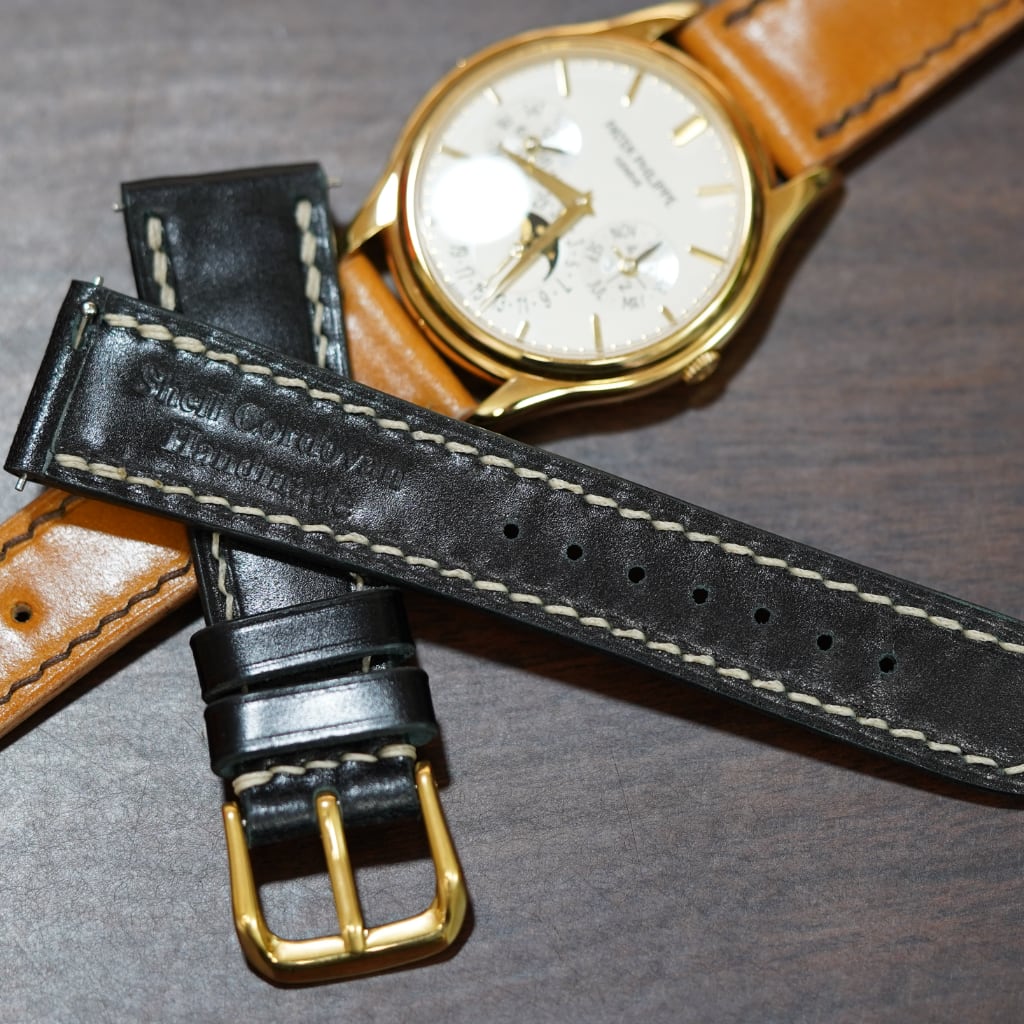
A handmade strap finishes a build the way nothing off a shelf can. These are cut, chiselled and stitched by hand by our leather artisans, in two leathers: shell cordovan — dense, glassy horsehide from Japan’s Shinki Hikaku tannery, and built double-sided — and full-grain cowhide, the top grade of hide, vegetable-tanned. All straps run 20mm at the lug, tapering to 16mm at the buckle on quick-release spring bars. That fits our 20mm-lug cases (the Bauhaus 33 runs 18mm, and the Seiko-Dweller’s bracelet is integrated) — and any other watch with 20mm lugs.
Narrow it down: All strapsShell CordovanCowhide
Sizing, leathers, and stitching — what to know before you strap one on.

![Seikonaut Bracelet 20/16mm [TITANIUM] - - - - Lucius Atelier - Swiss Quality Seiko Watch Mod Parts](http://luciusatelier.com/cdn/shop/files/Seikonaut-Bracelet-2016mm-TITANIUM-Lucius-Atelier-Swiss-Quality-Seiko-Watch-Mod-Parts-7_1600x.jpg?v=1745004195)
![Seikonaut Bracelet 20/16mm [TITANIUM] - - - - Lucius Atelier - Swiss Quality Seiko Watch Mod Parts](http://luciusatelier.com/cdn/shop/files/Seikonaut-Bracelet-2016mm-TITANIUM-Lucius-Atelier-Swiss-Quality-Seiko-Watch-Mod-Parts-7_2000x.jpg?v=1745004195)



![Full Grain Cowhide Leather Strap 20/16mm [Black, Side Stitch] - Small (14.5 - 17.0cm) - - - Lucius Atelier - Swiss Quality Seiko Watch Mod Parts](http://luciusatelier.com/cdn/shop/files/Full-Grain-Cowhide-Leather-Strap-2016mm-Black-Side-Stitch-Small-14_5-17_0cm-Lucius-Atelier-Swiss-Quality-Seiko-Watch-Mod-Parts_1200x.jpg?v=1707419935)
![Full Grain Cowhide Leather Strap 20/16mm [Black, Side Stitch] - Small (14.5 - 17.0cm) - - - Lucius Atelier - Swiss Quality Seiko Watch Mod Parts](http://luciusatelier.com/cdn/shop/files/Full-Grain-Cowhide-Leather-Strap-2016mm-Black-Side-Stitch-Small-14_5-17_0cm-Lucius-Atelier-Swiss-Quality-Seiko-Watch-Mod-Parts-2_1200x.jpg?v=1707419940)
![Full Grain Cowhide Leather Strap 20/16mm [Black, Side Stitch] - Small (14.5 - 17.0cm) - - - Lucius Atelier - Swiss Quality Seiko Watch Mod Parts](http://luciusatelier.com/cdn/shop/files/Full-Grain-Cowhide-Leather-Strap-2016mm-Black-Side-Stitch-Small-14_5-17_0cm-Lucius-Atelier-Swiss-Quality-Seiko-Watch-Mod-Parts-2_1600x.jpg?v=1707419940)
![Full Grain Cowhide Leather Strap 20/16mm [Black, Side Stitch] - Small (14.5 - 17.0cm) - - - Lucius Atelier - Swiss Quality Seiko Watch Mod Parts](http://luciusatelier.com/cdn/shop/files/Full-Grain-Cowhide-Leather-Strap-2016mm-Black-Side-Stitch-Small-14_5-17_0cm-Lucius-Atelier-Swiss-Quality-Seiko-Watch-Mod-Parts-2_2000x.jpg?v=1707419940)
![Full Grain Cowhide Leather Strap 20/16mm [Blue, Side Stitch] - Small (14.5 - 17.0cm) - - - Lucius Atelier - Swiss Quality Seiko Watch Mod Parts](http://luciusatelier.com/cdn/shop/files/Full-Grain-Cowhide-Leather-Strap-2016mm-Blue-Side-Stitch-Small-14_5-17_0cm-Lucius-Atelier-Swiss-Quality-Seiko-Watch-Mod-Parts_1200x.jpg?v=1707419945)
![Full Grain Cowhide Leather Strap 20/16mm [Blue, Side Stitch] - Small (14.5 - 17.0cm) - - - Lucius Atelier - Swiss Quality Seiko Watch Mod Parts](http://luciusatelier.com/cdn/shop/files/Full-Grain-Cowhide-Leather-Strap-2016mm-Blue-Side-Stitch-Small-14_5-17_0cm-Lucius-Atelier-Swiss-Quality-Seiko-Watch-Mod-Parts-2_1200x.jpg?v=1707419951)
![Full Grain Cowhide Leather Strap 20/16mm [Blue, Side Stitch] - Small (14.5 - 17.0cm) - - - Lucius Atelier - Swiss Quality Seiko Watch Mod Parts](http://luciusatelier.com/cdn/shop/files/Full-Grain-Cowhide-Leather-Strap-2016mm-Blue-Side-Stitch-Small-14_5-17_0cm-Lucius-Atelier-Swiss-Quality-Seiko-Watch-Mod-Parts-2_1600x.jpg?v=1707419951)
![Full Grain Cowhide Leather Strap 20/16mm [Blue, Side Stitch] - Small (14.5 - 17.0cm) - - - Lucius Atelier - Swiss Quality Seiko Watch Mod Parts](http://luciusatelier.com/cdn/shop/files/Full-Grain-Cowhide-Leather-Strap-2016mm-Blue-Side-Stitch-Small-14_5-17_0cm-Lucius-Atelier-Swiss-Quality-Seiko-Watch-Mod-Parts-2_2000x.jpg?v=1707419951)
![Full Grain Cowhide Leather Strap 20/16mm [Brown, Side Stitch] - Small (14.5 - 17.0cm) - - - Lucius Atelier - Swiss Quality Seiko Watch Mod Parts](http://luciusatelier.com/cdn/shop/files/Full-Grain-Cowhide-Leather-Strap-2016mm-Brown-Side-Stitch-Small-14_5-17_0cm-Lucius-Atelier-Swiss-Quality-Seiko-Watch-Mod-Parts_1200x.jpg?v=1707419957)
![Full Grain Cowhide Leather Strap 20/16mm [Brown, Side Stitch] - Small (14.5 - 17.0cm) - - - Lucius Atelier - Swiss Quality Seiko Watch Mod Parts](http://luciusatelier.com/cdn/shop/files/Full-Grain-Cowhide-Leather-Strap-2016mm-Brown-Side-Stitch-Small-14_5-17_0cm-Lucius-Atelier-Swiss-Quality-Seiko-Watch-Mod-Parts-2_1200x.jpg?v=1707419962)
![Full Grain Cowhide Leather Strap 20/16mm [Brown, Side Stitch] - Small (14.5 - 17.0cm) - - - Lucius Atelier - Swiss Quality Seiko Watch Mod Parts](http://luciusatelier.com/cdn/shop/files/Full-Grain-Cowhide-Leather-Strap-2016mm-Brown-Side-Stitch-Small-14_5-17_0cm-Lucius-Atelier-Swiss-Quality-Seiko-Watch-Mod-Parts-2_1600x.jpg?v=1707419962)
![Full Grain Cowhide Leather Strap 20/16mm [Brown, Side Stitch] - Small (14.5 - 17.0cm) - - - Lucius Atelier - Swiss Quality Seiko Watch Mod Parts](http://luciusatelier.com/cdn/shop/files/Full-Grain-Cowhide-Leather-Strap-2016mm-Brown-Side-Stitch-Small-14_5-17_0cm-Lucius-Atelier-Swiss-Quality-Seiko-Watch-Mod-Parts-2_2000x.jpg?v=1707419962)
![Full Grain Cowhide Leather Strap 20/16mm [Chocolate, Side Stitch]](http://luciusatelier.com/cdn/shop/files/topgraincowhideleatherchocolate1_1200x.jpg?v=1783838030)
![Full Grain Cowhide Leather Strap 20/16mm [Chocolate, Side Stitch]](http://luciusatelier.com/cdn/shop/files/topgraincowhideleatherchocolate2_1200x.jpg?v=1783838030)
![Full Grain Cowhide Leather Strap 20/16mm [Chocolate, Side Stitch]](http://luciusatelier.com/cdn/shop/files/topgraincowhideleatherchocolate2_1600x.jpg?v=1783838030)
![Full Grain Cowhide Leather Strap 20/16mm [Chocolate, Side Stitch]](http://luciusatelier.com/cdn/shop/files/topgraincowhideleatherchocolate2_2000x.jpg?v=1783838030)
![Full Grain Cowhide Leather Strap 20/16mm [Cognac, Side Stitch]](http://luciusatelier.com/cdn/shop/files/topgraincowhideleathercognac1_1200x.jpg?v=1783838187)
![Full Grain Cowhide Leather Strap 20/16mm [Cognac, Side Stitch]](http://luciusatelier.com/cdn/shop/files/topgraincowhideleathercognac2_1200x.jpg?v=1783838187)
![Full Grain Cowhide Leather Strap 20/16mm [Cognac, Side Stitch]](http://luciusatelier.com/cdn/shop/files/topgraincowhideleathercognac2_1600x.jpg?v=1783838187)
![Full Grain Cowhide Leather Strap 20/16mm [Cognac, Side Stitch]](http://luciusatelier.com/cdn/shop/files/topgraincowhideleathercognac2_2000x.jpg?v=1783838187)
![Full Grain Cowhide Leather Strap 20/16mm [Green, Side Stitch]](http://luciusatelier.com/cdn/shop/files/topgraincowhideleathergreen1_1200x.jpg?v=1783837857)
![Full Grain Cowhide Leather Strap 20/16mm [Green, Side Stitch]](http://luciusatelier.com/cdn/shop/files/topgraincowhideleathergreen2_1200x.jpg?v=1783837857)
![Full Grain Cowhide Leather Strap 20/16mm [Green, Side Stitch]](http://luciusatelier.com/cdn/shop/files/topgraincowhideleathergreen2_1600x.jpg?v=1783837857)
![Full Grain Cowhide Leather Strap 20/16mm [Green, Side Stitch]](http://luciusatelier.com/cdn/shop/files/topgraincowhideleathergreen2_2000x.jpg?v=1783837857)
![Shell Cordovan Leather Strap 20/16mm [Black, Full Stitch] - Small (14.5 - 17.0cm) - - - Lucius Atelier - Swiss Quality Seiko Watch Mod Parts](http://luciusatelier.com/cdn/shop/files/Shell-Cordovan-Leather-Strap-2016mm-Black-Full-Stitch-Small-14_5-17_0cm-Lucius-Atelier-Swiss-Quality-Seiko-Watch-Mod-Parts_1200x.jpg?v=1707333508)
![Shell Cordovan Leather Strap 20/16mm [Black, Full Stitch] - Small (14.5 - 17.0cm) - - - Lucius Atelier - Swiss Quality Seiko Watch Mod Parts](http://luciusatelier.com/cdn/shop/files/Shell-Cordovan-Leather-Strap-2016mm-Black-Full-Stitch-Small-14_5-17_0cm-Lucius-Atelier-Swiss-Quality-Seiko-Watch-Mod-Parts-2_1200x.jpg?v=1707333513)
![Shell Cordovan Leather Strap 20/16mm [Black, Full Stitch] - Small (14.5 - 17.0cm) - - - Lucius Atelier - Swiss Quality Seiko Watch Mod Parts](http://luciusatelier.com/cdn/shop/files/Shell-Cordovan-Leather-Strap-2016mm-Black-Full-Stitch-Small-14_5-17_0cm-Lucius-Atelier-Swiss-Quality-Seiko-Watch-Mod-Parts-3_1200x.jpg?v=1707333518)
![Shell Cordovan Leather Strap 20/16mm [Black, Full Stitch] - Small (14.5 - 17.0cm) - - - Lucius Atelier - Swiss Quality Seiko Watch Mod Parts](http://luciusatelier.com/cdn/shop/files/Shell-Cordovan-Leather-Strap-2016mm-Black-Full-Stitch-Small-14_5-17_0cm-Lucius-Atelier-Swiss-Quality-Seiko-Watch-Mod-Parts-4_1200x.jpg?v=1707333523)
![Shell Cordovan Leather Strap 20/16mm [Black, Full Stitch] - Small (14.5 - 17.0cm) - - - Lucius Atelier - Swiss Quality Seiko Watch Mod Parts](http://luciusatelier.com/cdn/shop/files/Shell-Cordovan-Leather-Strap-2016mm-Black-Full-Stitch-Small-14_5-17_0cm-Lucius-Atelier-Swiss-Quality-Seiko-Watch-Mod-Parts-2_1600x.jpg?v=1707333513)
![Shell Cordovan Leather Strap 20/16mm [Black, Full Stitch] - Small (14.5 - 17.0cm) - - - Lucius Atelier - Swiss Quality Seiko Watch Mod Parts](http://luciusatelier.com/cdn/shop/files/Shell-Cordovan-Leather-Strap-2016mm-Black-Full-Stitch-Small-14_5-17_0cm-Lucius-Atelier-Swiss-Quality-Seiko-Watch-Mod-Parts-2_2000x.jpg?v=1707333513)
![Shell Cordovan Leather Strap 20/16mm [Black, Side Stitch] - Small (14.5 - 17.0cm) - - - Lucius Atelier - Swiss Quality Seiko Watch Mod Parts](http://luciusatelier.com/cdn/shop/files/Shell-Cordovan-Leather-Strap-2016mm-Black-Side-Stitch-Small-14_5-17_0cm-Lucius-Atelier-Swiss-Quality-Seiko-Watch-Mod-Parts_1200x.jpg?v=1707333625)
![Shell Cordovan Leather Strap 20/16mm [Black, Side Stitch] - Small (14.5 - 17.0cm) - - - Lucius Atelier - Swiss Quality Seiko Watch Mod Parts](http://luciusatelier.com/cdn/shop/files/Shell-Cordovan-Leather-Strap-2016mm-Black-Side-Stitch-Small-14_5-17_0cm-Lucius-Atelier-Swiss-Quality-Seiko-Watch-Mod-Parts-2_1200x.jpg?v=1707333630)
![Shell Cordovan Leather Strap 20/16mm [Black, Side Stitch] - Small (14.5 - 17.0cm) - - - Lucius Atelier - Swiss Quality Seiko Watch Mod Parts](http://luciusatelier.com/cdn/shop/files/Shell-Cordovan-Leather-Strap-2016mm-Black-Side-Stitch-Small-14_5-17_0cm-Lucius-Atelier-Swiss-Quality-Seiko-Watch-Mod-Parts-3_1200x.jpg?v=1707333634)
![Shell Cordovan Leather Strap 20/16mm [Black, Side Stitch] - Small (14.5 - 17.0cm) - - - Lucius Atelier - Swiss Quality Seiko Watch Mod Parts](http://luciusatelier.com/cdn/shop/files/Shell-Cordovan-Leather-Strap-2016mm-Black-Side-Stitch-Small-14_5-17_0cm-Lucius-Atelier-Swiss-Quality-Seiko-Watch-Mod-Parts-4_1200x.jpg?v=1707333639)
![Shell Cordovan Leather Strap 20/16mm [Black, Side Stitch] - Small (14.5 - 17.0cm) - - - Lucius Atelier - Swiss Quality Seiko Watch Mod Parts](http://luciusatelier.com/cdn/shop/files/Shell-Cordovan-Leather-Strap-2016mm-Black-Side-Stitch-Small-14_5-17_0cm-Lucius-Atelier-Swiss-Quality-Seiko-Watch-Mod-Parts-2_1600x.jpg?v=1707333630)
![Shell Cordovan Leather Strap 20/16mm [Black, Side Stitch] - Small (14.5 - 17.0cm) - - - Lucius Atelier - Swiss Quality Seiko Watch Mod Parts](http://luciusatelier.com/cdn/shop/files/Shell-Cordovan-Leather-Strap-2016mm-Black-Side-Stitch-Small-14_5-17_0cm-Lucius-Atelier-Swiss-Quality-Seiko-Watch-Mod-Parts-2_2000x.jpg?v=1707333630)
![Shell Cordovan Leather Strap 20/16mm [Chocolate, Full Stitch] - Small (14.5 - 17.0cm) - - - Lucius Atelier - Swiss Quality Seiko Watch Mod Parts](http://luciusatelier.com/cdn/shop/files/Shell-Cordovan-Leather-Strap-2016mm-Chocolate-Full-Stitch-Small-14_5-17_0cm-Lucius-Atelier-Swiss-Quality-Seiko-Watch-Mod-Parts_1200x.jpg?v=1707333527)
![Shell Cordovan Leather Strap 20/16mm [Chocolate, Full Stitch] - Small (14.5 - 17.0cm) - - - Lucius Atelier - Swiss Quality Seiko Watch Mod Parts](http://luciusatelier.com/cdn/shop/files/Shell-Cordovan-Leather-Strap-2016mm-Chocolate-Full-Stitch-Small-14_5-17_0cm-Lucius-Atelier-Swiss-Quality-Seiko-Watch-Mod-Parts-2_1200x.jpg?v=1707333532)
![Shell Cordovan Leather Strap 20/16mm [Chocolate, Full Stitch] - Small (14.5 - 17.0cm) - - - Lucius Atelier - Swiss Quality Seiko Watch Mod Parts](http://luciusatelier.com/cdn/shop/files/Shell-Cordovan-Leather-Strap-2016mm-Chocolate-Full-Stitch-Small-14_5-17_0cm-Lucius-Atelier-Swiss-Quality-Seiko-Watch-Mod-Parts-3_1200x.jpg?v=1707333537)
![Shell Cordovan Leather Strap 20/16mm [Chocolate, Full Stitch] - Small (14.5 - 17.0cm) - - - Lucius Atelier - Swiss Quality Seiko Watch Mod Parts](http://luciusatelier.com/cdn/shop/files/Shell-Cordovan-Leather-Strap-2016mm-Chocolate-Full-Stitch-Small-14_5-17_0cm-Lucius-Atelier-Swiss-Quality-Seiko-Watch-Mod-Parts-4_1200x.jpg?v=1707333541)
![Shell Cordovan Leather Strap 20/16mm [Chocolate, Full Stitch] - Small (14.5 - 17.0cm) - - - Lucius Atelier - Swiss Quality Seiko Watch Mod Parts](http://luciusatelier.com/cdn/shop/files/Shell-Cordovan-Leather-Strap-2016mm-Chocolate-Full-Stitch-Small-14_5-17_0cm-Lucius-Atelier-Swiss-Quality-Seiko-Watch-Mod-Parts-2_1600x.jpg?v=1707333532)
![Shell Cordovan Leather Strap 20/16mm [Chocolate, Full Stitch] - Small (14.5 - 17.0cm) - - - Lucius Atelier - Swiss Quality Seiko Watch Mod Parts](http://luciusatelier.com/cdn/shop/files/Shell-Cordovan-Leather-Strap-2016mm-Chocolate-Full-Stitch-Small-14_5-17_0cm-Lucius-Atelier-Swiss-Quality-Seiko-Watch-Mod-Parts-2_2000x.jpg?v=1707333532)
![Shell Cordovan Leather Strap 20/16mm [Cognac, Full Stitch] - Small (14.5 - 17.0cm) - - - Lucius Atelier - Swiss Quality Seiko Watch Mod Parts](http://luciusatelier.com/cdn/shop/files/Shell-Cordovan-Leather-Strap-2016mm-Cognac-Full-Stitch-Small-14_5-17_0cm-Lucius-Atelier-Swiss-Quality-Seiko-Watch-Mod-Parts_1200x.jpg?v=1707333546)
![Shell Cordovan Leather Strap 20/16mm [Cognac, Full Stitch] - Small (14.5 - 17.0cm) - - - Lucius Atelier - Swiss Quality Seiko Watch Mod Parts](http://luciusatelier.com/cdn/shop/files/Shell-Cordovan-Leather-Strap-2016mm-Cognac-Full-Stitch-Small-14_5-17_0cm-Lucius-Atelier-Swiss-Quality-Seiko-Watch-Mod-Parts-2_1200x.jpg?v=1707333550)
![Shell Cordovan Leather Strap 20/16mm [Cognac, Full Stitch] - Small (14.5 - 17.0cm) - - - Lucius Atelier - Swiss Quality Seiko Watch Mod Parts](http://luciusatelier.com/cdn/shop/files/Shell-Cordovan-Leather-Strap-2016mm-Cognac-Full-Stitch-Small-14_5-17_0cm-Lucius-Atelier-Swiss-Quality-Seiko-Watch-Mod-Parts-3_1200x.jpg?v=1707333555)
![Shell Cordovan Leather Strap 20/16mm [Cognac, Full Stitch] - Small (14.5 - 17.0cm) - - - Lucius Atelier - Swiss Quality Seiko Watch Mod Parts](http://luciusatelier.com/cdn/shop/files/Shell-Cordovan-Leather-Strap-2016mm-Cognac-Full-Stitch-Small-14_5-17_0cm-Lucius-Atelier-Swiss-Quality-Seiko-Watch-Mod-Parts-4_1200x.jpg?v=1707333560)
![Shell Cordovan Leather Strap 20/16mm [Cognac, Full Stitch] - Small (14.5 - 17.0cm) - - - Lucius Atelier - Swiss Quality Seiko Watch Mod Parts](http://luciusatelier.com/cdn/shop/files/Shell-Cordovan-Leather-Strap-2016mm-Cognac-Full-Stitch-Small-14_5-17_0cm-Lucius-Atelier-Swiss-Quality-Seiko-Watch-Mod-Parts-2_1600x.jpg?v=1707333550)
![Shell Cordovan Leather Strap 20/16mm [Cognac, Full Stitch] - Small (14.5 - 17.0cm) - - - Lucius Atelier - Swiss Quality Seiko Watch Mod Parts](http://luciusatelier.com/cdn/shop/files/Shell-Cordovan-Leather-Strap-2016mm-Cognac-Full-Stitch-Small-14_5-17_0cm-Lucius-Atelier-Swiss-Quality-Seiko-Watch-Mod-Parts-2_2000x.jpg?v=1707333550)
![Shell Cordovan Leather Strap 20/16mm [Green, Full Stitch] - Small (14.5 - 17.0cm) - - - Lucius Atelier - Swiss Quality Seiko Watch Mod Parts](http://luciusatelier.com/cdn/shop/files/Shell-Cordovan-Leather-Strap-2016mm-Green-Full-Stitch-Small-14_5-17_0cm-Lucius-Atelier-Swiss-Quality-Seiko-Watch-Mod-Parts_1200x.jpg?v=1707333564)
![Shell Cordovan Leather Strap 20/16mm [Green, Full Stitch] - Small (14.5 - 17.0cm) - - - Lucius Atelier - Swiss Quality Seiko Watch Mod Parts](http://luciusatelier.com/cdn/shop/files/Shell-Cordovan-Leather-Strap-2016mm-Green-Full-Stitch-Small-14_5-17_0cm-Lucius-Atelier-Swiss-Quality-Seiko-Watch-Mod-Parts-2_1200x.jpg?v=1707333569)
![Shell Cordovan Leather Strap 20/16mm [Green, Full Stitch] - Small (14.5 - 17.0cm) - - - Lucius Atelier - Swiss Quality Seiko Watch Mod Parts](http://luciusatelier.com/cdn/shop/files/Shell-Cordovan-Leather-Strap-2016mm-Green-Full-Stitch-Small-14_5-17_0cm-Lucius-Atelier-Swiss-Quality-Seiko-Watch-Mod-Parts-3_1200x.jpg?v=1707333574)
![Shell Cordovan Leather Strap 20/16mm [Green, Full Stitch] - Small (14.5 - 17.0cm) - - - Lucius Atelier - Swiss Quality Seiko Watch Mod Parts](http://luciusatelier.com/cdn/shop/files/Shell-Cordovan-Leather-Strap-2016mm-Green-Full-Stitch-Small-14_5-17_0cm-Lucius-Atelier-Swiss-Quality-Seiko-Watch-Mod-Parts-4_1200x.jpg?v=1707333579)
![Shell Cordovan Leather Strap 20/16mm [Green, Full Stitch] - Small (14.5 - 17.0cm) - - - Lucius Atelier - Swiss Quality Seiko Watch Mod Parts](http://luciusatelier.com/cdn/shop/files/Shell-Cordovan-Leather-Strap-2016mm-Green-Full-Stitch-Small-14_5-17_0cm-Lucius-Atelier-Swiss-Quality-Seiko-Watch-Mod-Parts-2_1600x.jpg?v=1707333569)
![Shell Cordovan Leather Strap 20/16mm [Green, Full Stitch] - Small (14.5 - 17.0cm) - - - Lucius Atelier - Swiss Quality Seiko Watch Mod Parts](http://luciusatelier.com/cdn/shop/files/Shell-Cordovan-Leather-Strap-2016mm-Green-Full-Stitch-Small-14_5-17_0cm-Lucius-Atelier-Swiss-Quality-Seiko-Watch-Mod-Parts-2_2000x.jpg?v=1707333569)
![Shell Cordovan Leather Strap 20/16mm [Navy Blue, Full Stitch] - Small (14.5 - 17.0cm) - - - Lucius Atelier - Swiss Quality Seiko Watch Mod Parts](http://luciusatelier.com/cdn/shop/files/Shell-Cordovan-Leather-Strap-2016mm-Navy-Blue-Full-Stitch-Small-14_5-17_0cm-Lucius-Atelier-Swiss-Quality-Seiko-Watch-Mod-Parts_1200x.jpg?v=1707333583)
![Shell Cordovan Leather Strap 20/16mm [Navy Blue, Full Stitch] - Small (14.5 - 17.0cm) - - - Lucius Atelier - Swiss Quality Seiko Watch Mod Parts](http://luciusatelier.com/cdn/shop/files/Shell-Cordovan-Leather-Strap-2016mm-Navy-Blue-Full-Stitch-Small-14_5-17_0cm-Lucius-Atelier-Swiss-Quality-Seiko-Watch-Mod-Parts-2_1200x.jpg?v=1707333588)
![Shell Cordovan Leather Strap 20/16mm [Navy Blue, Full Stitch] - Small (14.5 - 17.0cm) - - - Lucius Atelier - Swiss Quality Seiko Watch Mod Parts](http://luciusatelier.com/cdn/shop/files/Shell-Cordovan-Leather-Strap-2016mm-Navy-Blue-Full-Stitch-Small-14_5-17_0cm-Lucius-Atelier-Swiss-Quality-Seiko-Watch-Mod-Parts-3_1200x.jpg?v=1707333593)
![Shell Cordovan Leather Strap 20/16mm [Navy Blue, Full Stitch] - Small (14.5 - 17.0cm) - - - Lucius Atelier - Swiss Quality Seiko Watch Mod Parts](http://luciusatelier.com/cdn/shop/files/Shell-Cordovan-Leather-Strap-2016mm-Navy-Blue-Full-Stitch-Small-14_5-17_0cm-Lucius-Atelier-Swiss-Quality-Seiko-Watch-Mod-Parts-4_1200x.jpg?v=1707333598)
![Shell Cordovan Leather Strap 20/16mm [Navy Blue, Full Stitch] - Small (14.5 - 17.0cm) - - - Lucius Atelier - Swiss Quality Seiko Watch Mod Parts](http://luciusatelier.com/cdn/shop/files/Shell-Cordovan-Leather-Strap-2016mm-Navy-Blue-Full-Stitch-Small-14_5-17_0cm-Lucius-Atelier-Swiss-Quality-Seiko-Watch-Mod-Parts-2_1600x.jpg?v=1707333588)
![Shell Cordovan Leather Strap 20/16mm [Navy Blue, Full Stitch] - Small (14.5 - 17.0cm) - - - Lucius Atelier - Swiss Quality Seiko Watch Mod Parts](http://luciusatelier.com/cdn/shop/files/Shell-Cordovan-Leather-Strap-2016mm-Navy-Blue-Full-Stitch-Small-14_5-17_0cm-Lucius-Atelier-Swiss-Quality-Seiko-Watch-Mod-Parts-2_2000x.jpg?v=1707333588)
![Shell Cordovan Leather Strap 20/16mm [Red Wine, Full Stitch] - Small (14.5 - 17.0cm) - - - Lucius Atelier - Swiss Quality Seiko Watch Mod Parts](http://luciusatelier.com/cdn/shop/files/Shell-Cordovan-Leather-Strap-2016mm-Red-Wine-Full-Stitch-Small-14_5-17_0cm-Lucius-Atelier-Swiss-Quality-Seiko-Watch-Mod-Parts_1200x.jpg?v=1707333602)
![Shell Cordovan Leather Strap 20/16mm [Red Wine, Full Stitch] - Small (14.5 - 17.0cm) - - - Lucius Atelier - Swiss Quality Seiko Watch Mod Parts](http://luciusatelier.com/cdn/shop/files/Shell-Cordovan-Leather-Strap-2016mm-Red-Wine-Full-Stitch-Small-14_5-17_0cm-Lucius-Atelier-Swiss-Quality-Seiko-Watch-Mod-Parts-2_1200x.jpg?v=1707333607)
![Shell Cordovan Leather Strap 20/16mm [Red Wine, Full Stitch] - Small (14.5 - 17.0cm) - - - Lucius Atelier - Swiss Quality Seiko Watch Mod Parts](http://luciusatelier.com/cdn/shop/files/Shell-Cordovan-Leather-Strap-2016mm-Red-Wine-Full-Stitch-Small-14_5-17_0cm-Lucius-Atelier-Swiss-Quality-Seiko-Watch-Mod-Parts-3_1200x.jpg?v=1707333612)
![Shell Cordovan Leather Strap 20/16mm [Red Wine, Full Stitch] - Small (14.5 - 17.0cm) - - - Lucius Atelier - Swiss Quality Seiko Watch Mod Parts](http://luciusatelier.com/cdn/shop/files/Shell-Cordovan-Leather-Strap-2016mm-Red-Wine-Full-Stitch-Small-14_5-17_0cm-Lucius-Atelier-Swiss-Quality-Seiko-Watch-Mod-Parts-4_1200x.jpg?v=1707333617)
![Shell Cordovan Leather Strap 20/16mm [Red Wine, Full Stitch] - Small (14.5 - 17.0cm) - - - Lucius Atelier - Swiss Quality Seiko Watch Mod Parts](http://luciusatelier.com/cdn/shop/files/Shell-Cordovan-Leather-Strap-2016mm-Red-Wine-Full-Stitch-Small-14_5-17_0cm-Lucius-Atelier-Swiss-Quality-Seiko-Watch-Mod-Parts-2_1600x.jpg?v=1707333607)
![Shell Cordovan Leather Strap 20/16mm [Red Wine, Full Stitch] - Small (14.5 - 17.0cm) - - - Lucius Atelier - Swiss Quality Seiko Watch Mod Parts](http://luciusatelier.com/cdn/shop/files/Shell-Cordovan-Leather-Strap-2016mm-Red-Wine-Full-Stitch-Small-14_5-17_0cm-Lucius-Atelier-Swiss-Quality-Seiko-Watch-Mod-Parts-2_2000x.jpg?v=1707333607)
