

![Seikonaut Bracelet 20/16mm [TITANIUM] - - - - Lucius Atelier - Swiss Quality Seiko Watch Mod Parts](http://luciusatelier.com/cdn/shop/files/Seikonaut-Bracelet-2016mm-TITANIUM-Lucius-Atelier-Swiss-Quality-Seiko-Watch-Mod-Parts-7_1600x.jpg?v=1745004195)
![Seikonaut Bracelet 20/16mm [TITANIUM] - - - - Lucius Atelier - Swiss Quality Seiko Watch Mod Parts](http://luciusatelier.com/cdn/shop/files/Seikonaut-Bracelet-2016mm-TITANIUM-Lucius-Atelier-Swiss-Quality-Seiko-Watch-Mod-Parts-7_2000x.jpg?v=1745004195)
Ask a Seiko modder what is ticking inside their build and the answer, more often than not, comes down to two letters: NH. Seiko's NH series has quietly become the beating heart of the modding world — the automatic movement most first builds start with and most tenth builds still trust.
This is the story of where the NH came from, how it stacks up against Swiss calibres like the ETA 2824 and Sellita SW200, and why — more than a decade after it appeared — it is still the movement I reach for on almost every build. Some of it is history; some of it is three years of wearing one every day (dishwasher included).

Where the NH Series Came From
Seiko's NH story begins with the company's long pursuit of dependable, everyday mechanical timekeeping. Seiko Instruments Inc. (SII) — the arm of Seiko responsible for movement production — already had that foundation in its in-house 4R series, a line of automatic calibres celebrated for reliability and simple, forgiving construction.
In the early 2010s, SII began supplying a parallel lineup — the NH series — built for external use. Mechanically these calibres mirror their 4R counterparts: the NH35 shares its base architecture with the 4R35, the NH36 with the 4R36, and so on. The difference was who could buy them. Instead of staying inside Seiko-branded watches, the NH line went to microbrands, independent watchmakers, and the modding community worldwide.
That quiet decision reshaped affordable mechanical watchmaking. Suddenly a Japanese-engineered automatic with hacking and hand-winding — features once reserved for pricier pieces — was within reach of anyone building at home. The NH delivered industrial reliability without the prestige markup of Swiss calibres, and it has anchored the modding world ever since.
My Seikonaut, Three Years On
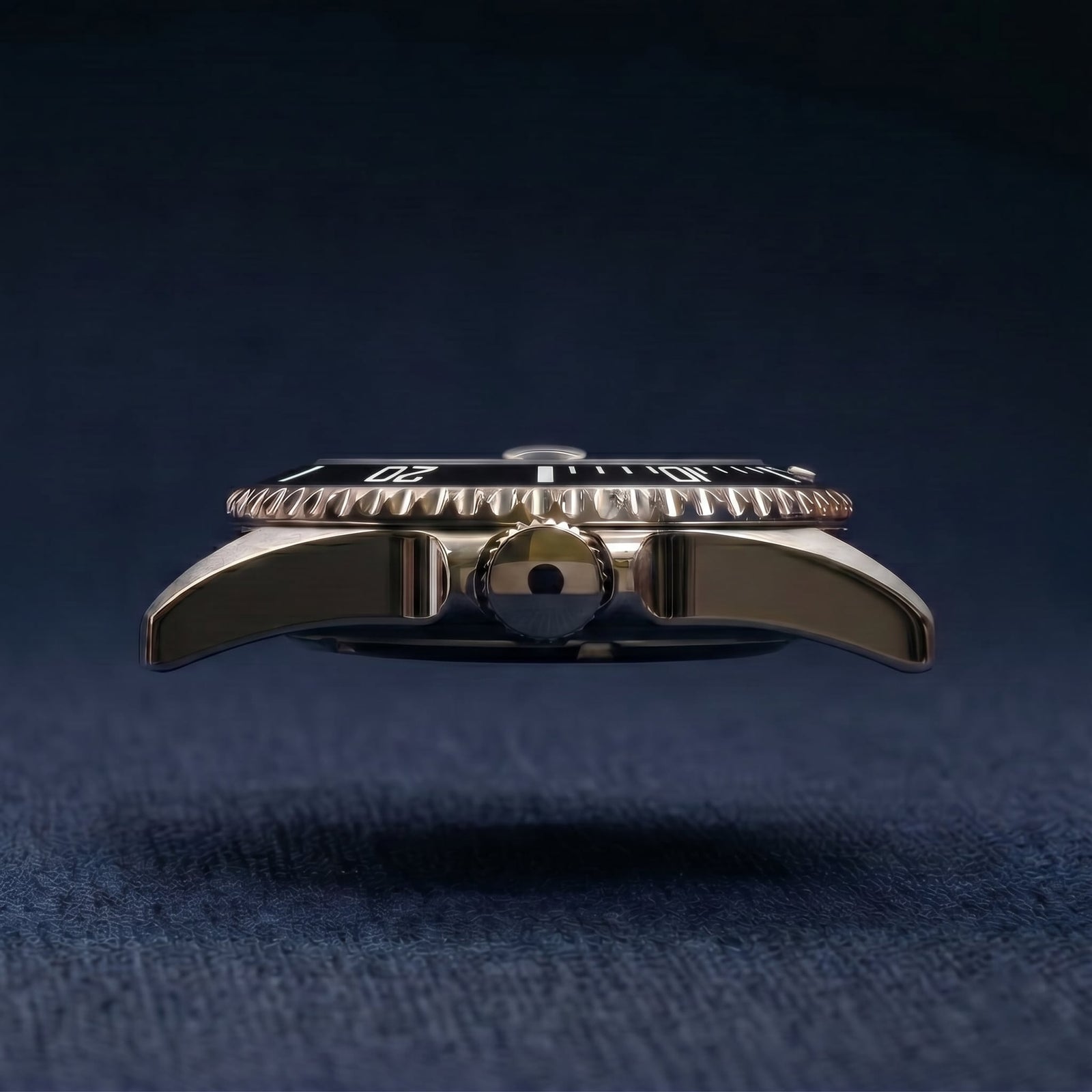
My Seikonaut 36mm Turquoise mod was my daily companion from 2022 — my go-to for almost three straight years. It travelled with me through humid days, accidental knocks, and countless wrist shots. When it finally earned an upgrade I rebuilt it into the Seikonaut 38mm Titanium Ultra Thin Edition — a lighter, more refined case and bracelet — while keeping the same turquoise dial, handset, and the ever-faithful NH38 inside.
Along the way it survived one rather unconventional cleaning experiment. Out of curiosity (and a little laziness) I once ran the whole watch through the dishwasher — a full 70°C cycle with a detergent tablet. The wash was fierce and the heat intense, yet the watch came out sparkling and running as if nothing had happened.
What still amazes me is the resilience of the movement. After three years of continuous wear — and that 70°C cycle — I put it on the timegrapher and it read ±0 seconds per day. That is not a typical factory result; it is what a well-settled NH can do once it has run in.

Why Modders Reach for the NH
Strip away the romance and the practical case is straightforward:
- Affordable precision — factory-rated at −20 to +40 seconds a day, and easily regulated far tighter with basic tools.
- Robust build — 24 jewels and all-metal construction, engineered to shrug off shocks and run for years.
- Universal compatibility — the same ø29.36mm mount across the family drops into almost any Seiko mod case, from Explorer-style builds to titanium Seikonaut cases.
- Hacking and hand-winding — modern convenience Seiko once reserved for pricier calibres.
- Efficient winding — Seiko's Magic Lever system winds efficiently from the smallest wrist motion.

The NH Family at a Glance
Every NH shares one architecture — Seiko's Type M — so dials, hands, and cases move freely between them. What changes is the complication and, on the skeleton calibres, the finish. Pick by the layout your dial needs:
| Movement | Complication | Best for |
|---|---|---|
| NH34 | GMT + date | Dual-time and travel builds |
| NH35 | Date | The all-rounder — classic dive and field styles |
| NH36 | Day-date | SKX-style conversions |
| NH38 | No-date / open-heart | Minimalist and open-heart dials |
| NH70 / NH71 / NH72 | Skeleton (no date) | Full-view builds — silver, gilt, or gunmetal |
Reach for the movement your dial is cut for: a date dial needs the NH35, a day-date needs the NH36, an open-heart or sterile dial suits the NH38, and a GMT layout needs the NH34. The full range lives in the movements collection .
NH vs the Swiss Calibres
The NH is most often measured against two Swiss workhorses, the ETA 2824-2 and Sellita SW200. Both carry heritage and polish — and a price roughly three to five times higher. The interesting part is how little that buys you in daily use.
Reliability. The NH's robust gear train and simple architecture make it exceptionally shock-tolerant and forgiving to service. The Swiss calibres are finely made but run tighter tolerances and ask for more frequent servicing, which adds to lifetime cost.
Accuracy. An NH35 or NH38 leaves the factory rated at −20 to +40 seconds a day, but regulates readily to within a few seconds — competitive in practice with a standard-grade ETA or Sellita rated around ±12. My own NH38 sits at ±0 after three years.
Serviceability. Parts, spare movements, and diagrams are everywhere and inexpensive; most watchmakers know the platform cold. And because the movement costs so little, a water-damaged or badly knocked NH is usually cheaper to replace outright than to overhaul — a practicality the Swiss options can't match.
| Movement | Origin | Factory accuracy | Power reserve | Relative cost |
|---|---|---|---|---|
| Seiko NH3x / NH7x | Japan | −20 / +40 s/day | 41 hours | Baseline (lowest) |
| Sellita SW200-1 | Switzerland | ±12 s/day | 38 hours | ~3–4× the NH |
| ETA 2824-2 | Switzerland | ±12 s/day | 38 hours | ~4–5× the NH |
The value gap is the whole point. Money not spent on the movement goes into the parts you actually see — the case, dial, crystal, and finishing — with no compromise on whether the watch runs.
The Heart of Every Mod
The NH is more than a mechanism; it is the part of a build you stop worrying about, which is exactly what frees you to obsess over everything else. Reliable, precise, endlessly compatible — it lets every builder chase a look while trusting the watch will simply run, year after year.
So whether your next project is a diver, a pilot, or a field mod, start with a Seiko NH. It isn't just a movement. It's the foundation the whole hobby is built on.
Ready to pick the heart of your next build?
